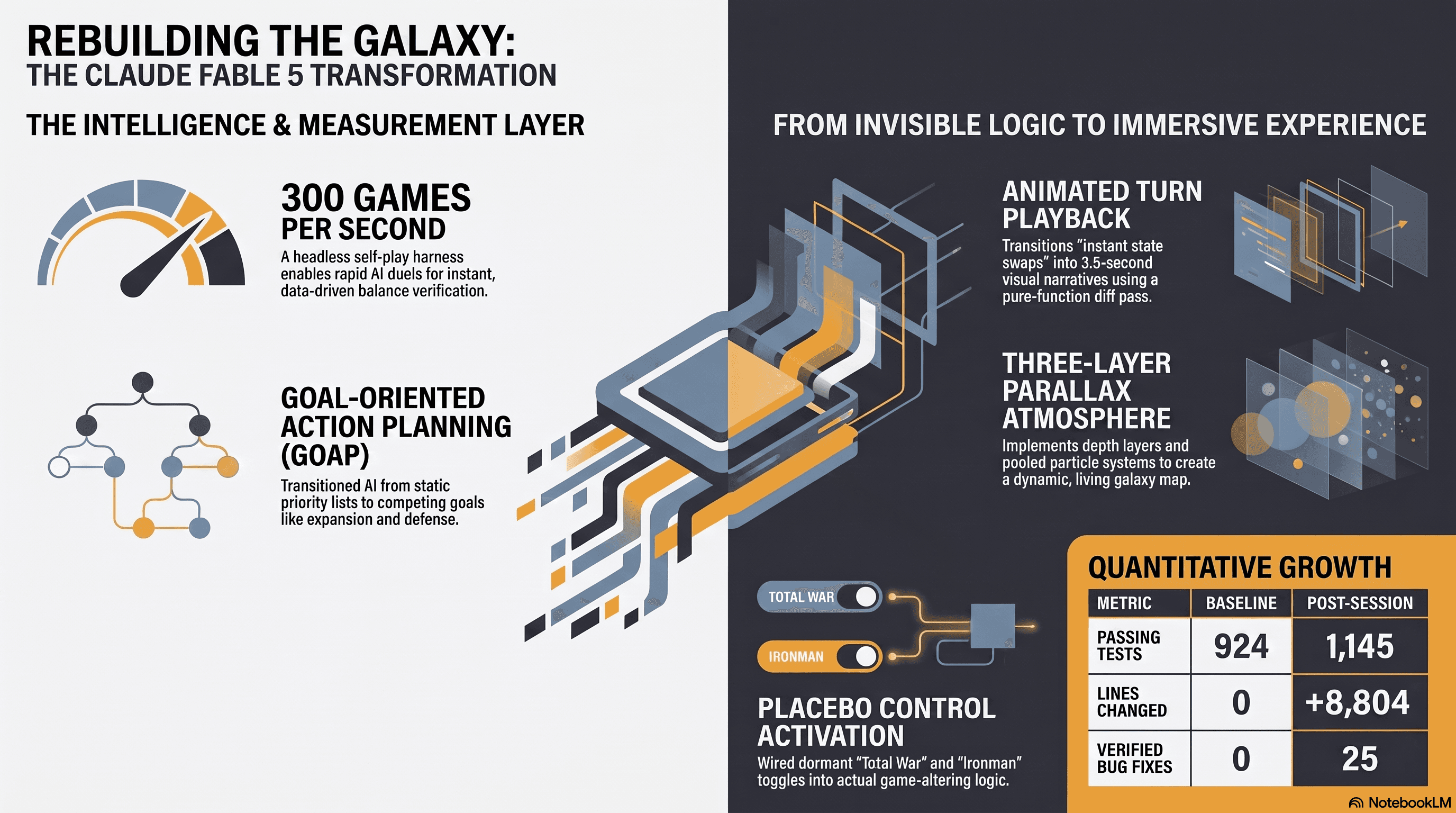
I know very little about game development. My retro 4X remake now has animated turn playback, a parallax starfield, a working AI planner, and 221 new passing tests anyway, thanks to one session with Claude Fable 5 and seven agents running in parallel. Also included: the difficulty system we caught making easy mode stronger than hard.
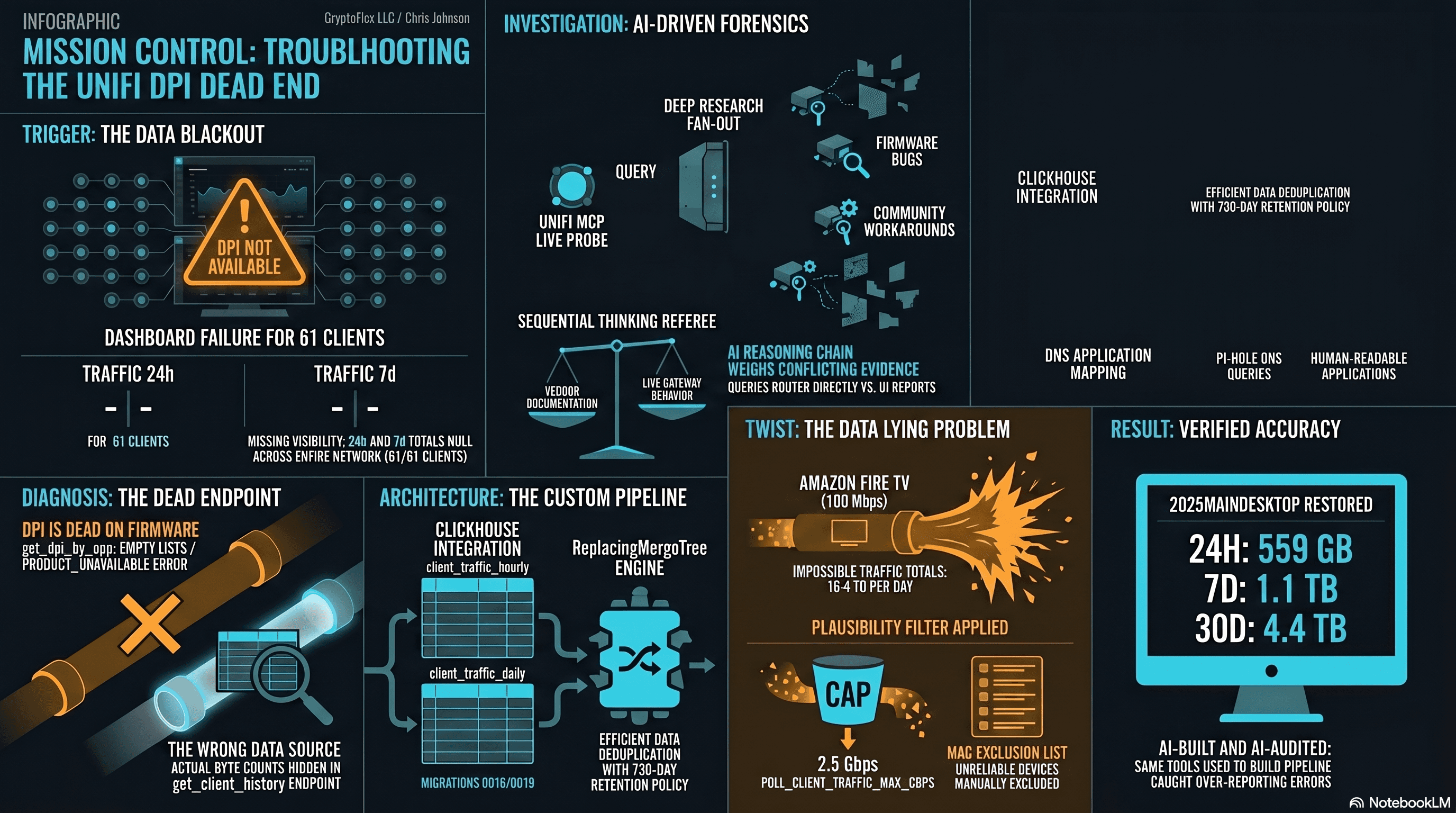
The Clients page showed "--" for traffic and "DPI not available for this device" for applications. The investigation found that per-app DPI is genuinely dead on this firmware, but per-client hourly byte buckets are alive and well in a different endpoint the dashboard was never reading. Fix the source, accumulate in ClickHouse, reconstruct Top Applications from Pi-hole DNS, and then discover that some clients are reporting physically impossible volumes. One afternoon, one commit (e07a8ac, 27 files), three confessional asides, and a plausibility cap that became load-bearing.
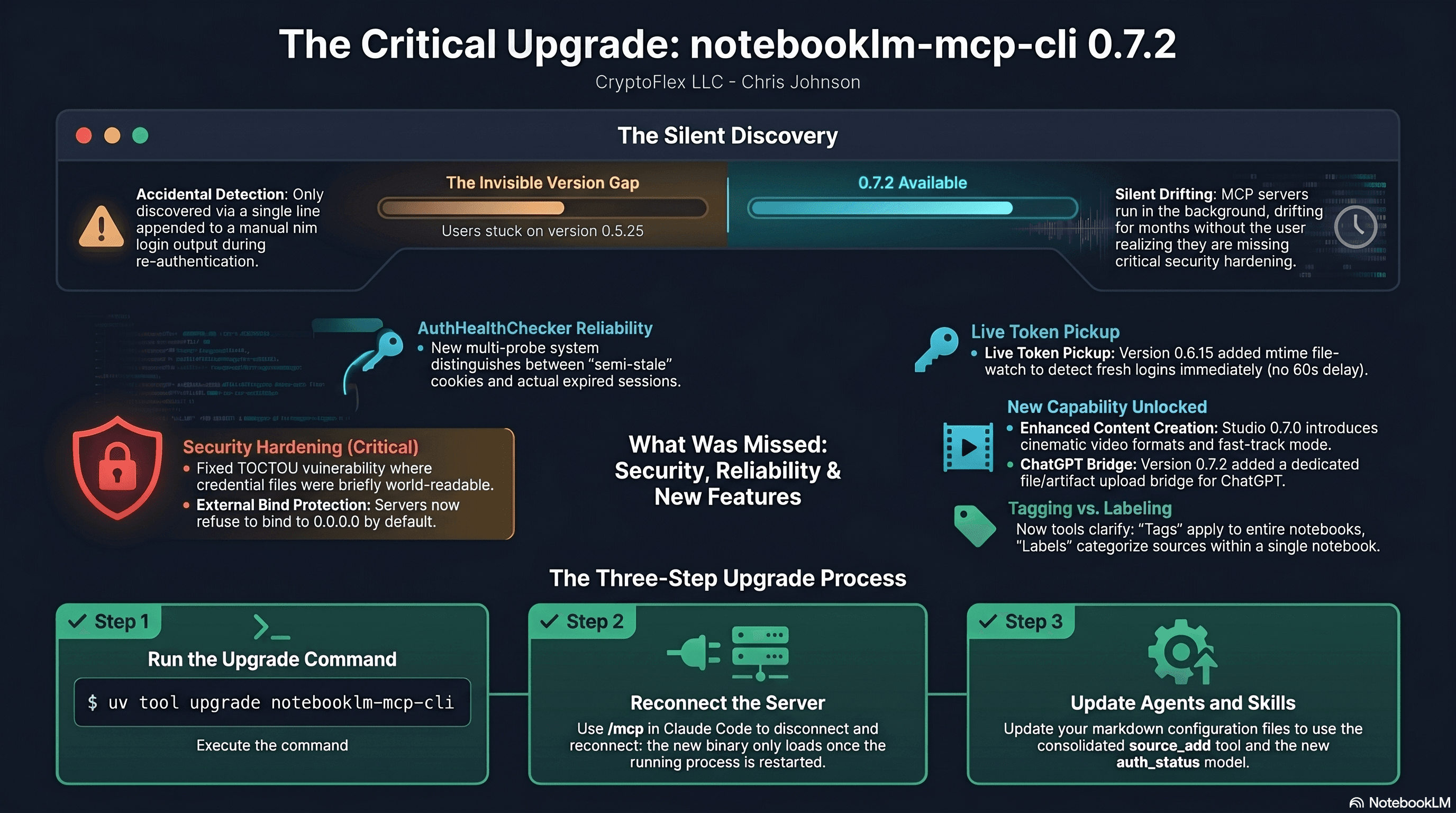
I was two minor versions behind on notebooklm-mcp-cli and had no idea until a re-auth banner interrupted a session. The gap was 0.5.25 to 0.7.2. Security fixes, auth reliability improvements, and new features I was missing the whole time. Here is the three-part upgrade that most people stop after step one.
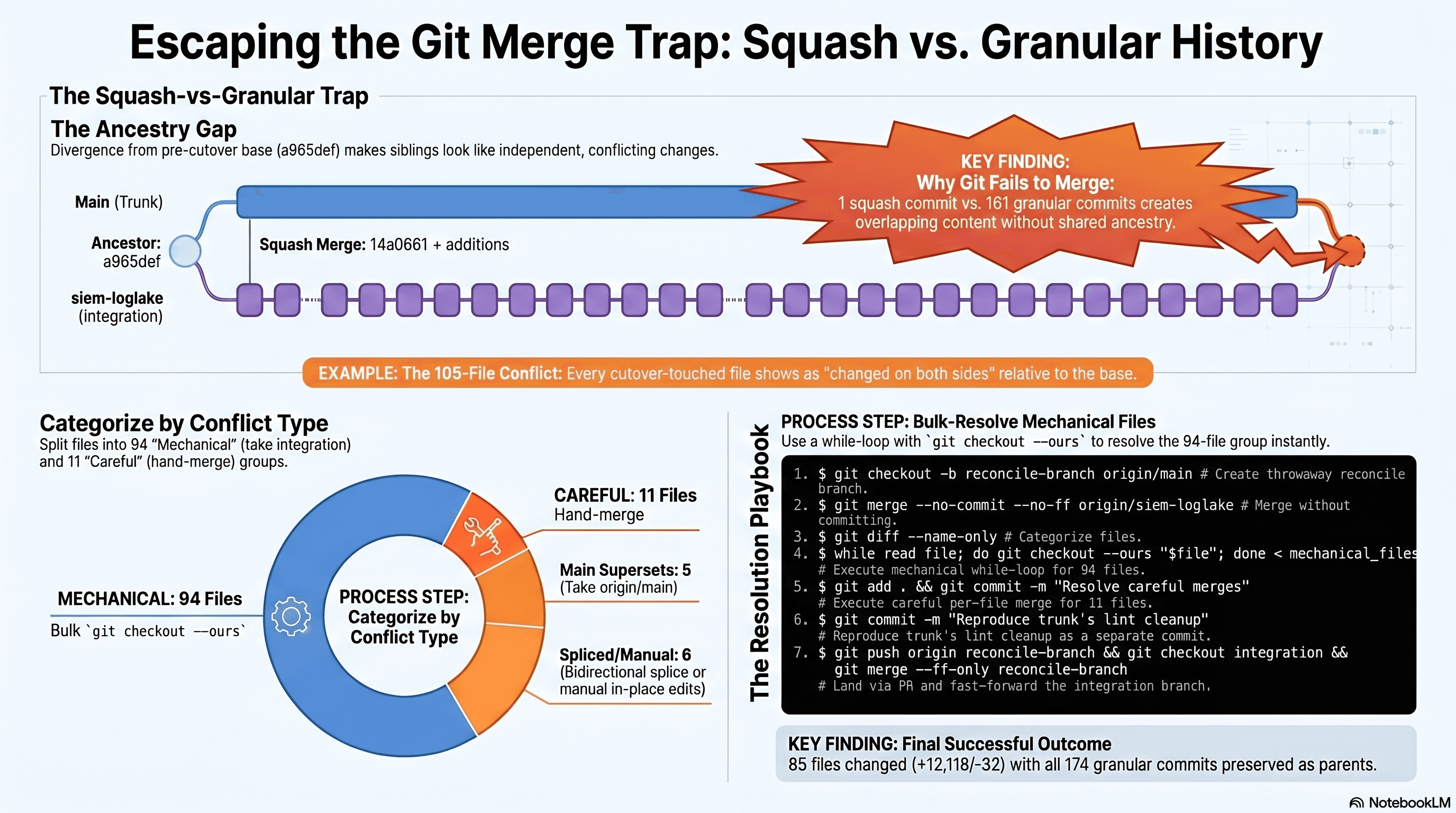
A long-lived integration branch went unmergeable two months after the trunk took its first big slice as a squash merge. Plain git merge spat 105 conflicted files. This post walks the playbook that landed it: how to spot the trap, how to categorize the conflicts, the exact commands that resolved 94 of them mechanically, and the three subtleties that bite you when you reach for `git checkout --ours`.
My Gmail assistant ran clean for two months, then quietly died for a full week before I noticed. The bridge daemon that drove it had pinned itself to a stale Claude CLI version, every scheduled fire failed within seconds, and no transcript was ever written. This post walks through why I migrated the agent off Claude Routines and onto the Claude Agent SDK, what the new stack looks like on launchd, and the parity gate that has to pass before the old agent gets decommissioned.
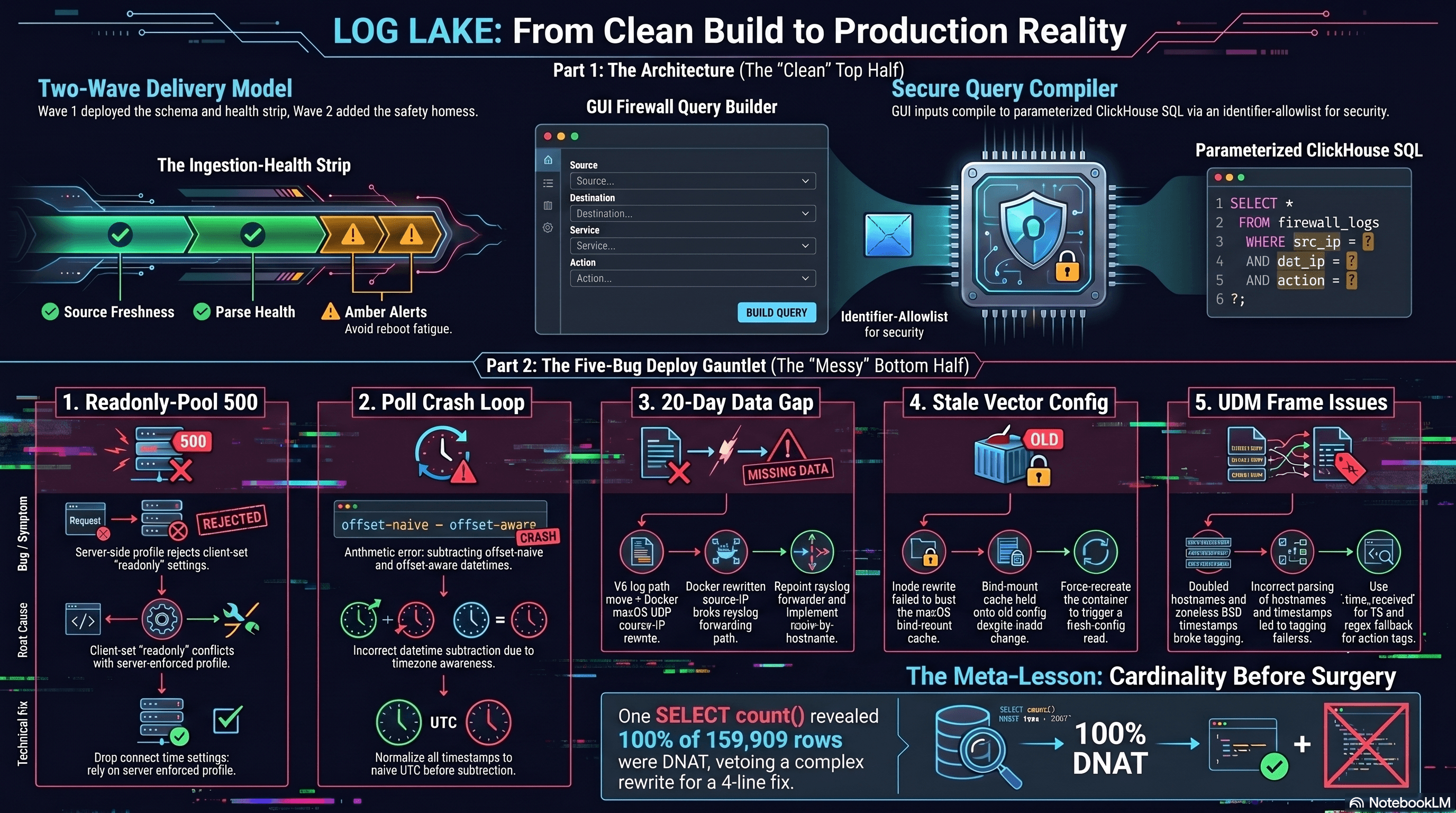
Part 6 of the home network dashboard build. The LOG LAKE panel ships a SIEM ingestion-health strip and a GUI firewall query builder that compiles to parameterized ClickHouse under the hood. One PR, two waves, 1193 backend tests at merge. Then deploy day on the live Mac mini produced five production-only bugs in a single afternoon: a readonly-pool 500, a timezone-mixed poll crash that had been firing every five minutes for hours, a 20-day-silent Pi-hole pipeline (two layers stacked), a Vector container reading a stale bind-mounted config, and a UDM doubled-hostname frame that silently broke action derivation for 159,909 rows. The meta-lesson is that the proposed fix for the last one was an invasive Vector source rewrite that the persona team vetoed in favor of an operator toggle and a four-line MV recreation.
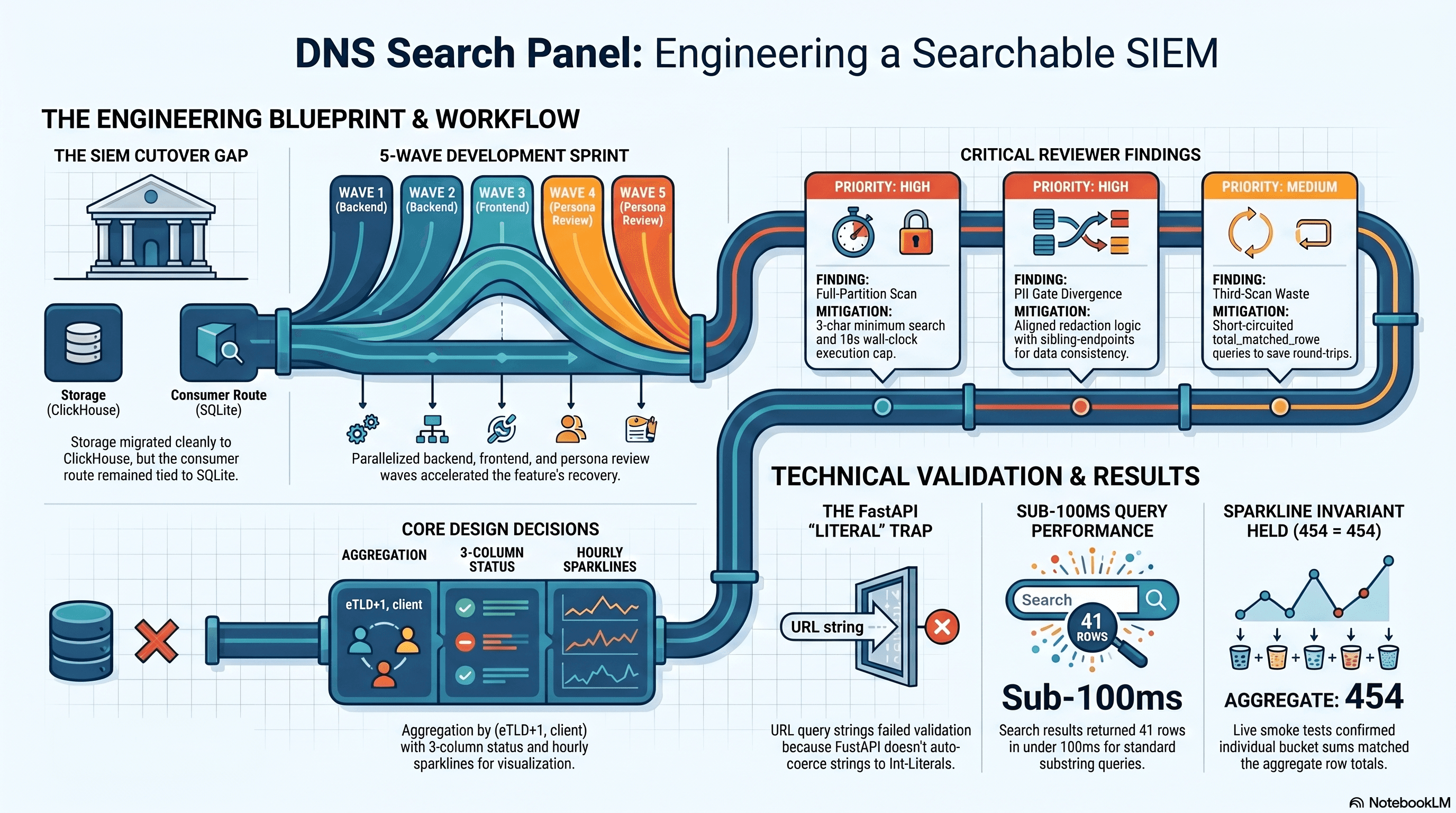
Part 6 of the home network dashboard build. The SIEM cutover dropped the DNS search endpoint without replacing it, and the only reason I caught it was clicking into the live dashboard and seeing "Failed to load DNS query log." This post walks the session that put search back: the diagnosis, the brainstorming workflow that pinned down five contested design choices, the five-wave persona dispatch, the parallel reviews that caught a third-scan query and a PII gate divergence, the FastAPI int-Literal gotcha that ate an hour, and a live smoke at 41 results in under 100ms with the sparkline-sum-equals-aggregate-total invariant holding 454 = 454 on the first row.
The climax of the Wazuh homelab series. deploy-wazuh.yml meets reality, eight bugs cascade across two evenings, the UDM Pro starts forwarding live syslog, three agents enroll across Linux, Pi, and Apple Silicon, and the captain pattern that orchestrated all of it gets an honest retrospective.
How a captain-orchestrated, nine-wave Ansible build went from clean repo to bootstrap-applied on a live HUNSN, including a sudo-rs surprise, a vault leak that demanded an immediate panic-rotate, a group_vars file shadowed by a directory of the same name, and a Multipass dry-run that caught two real playbook bugs before they could touch production.
Why a security engineer running a small home network picked Wazuh over Splunk, Elastic, and Graylog, what hardware caught the job, and the 29-task implementation plan that went through 5 patches before a single playbook ran against the target server.
Part 5 of the home network dashboard build. Phase 1.1 ships the Network tab, five new surfaces, two new security signals, and 694 backend tests at merge. A 5-wave persona team caught a critical ship-blocker before merge, then in-session live verification on the deployed dashboard caught two more bugs of the exact same shape: wrong join field, silent zero, fixtures encoded the same wrong assumption. The marquee lesson is that persona-team review is necessary but not sufficient. The second line of defense is running the live system in-session, not waiting for a scheduled probe to find drift.
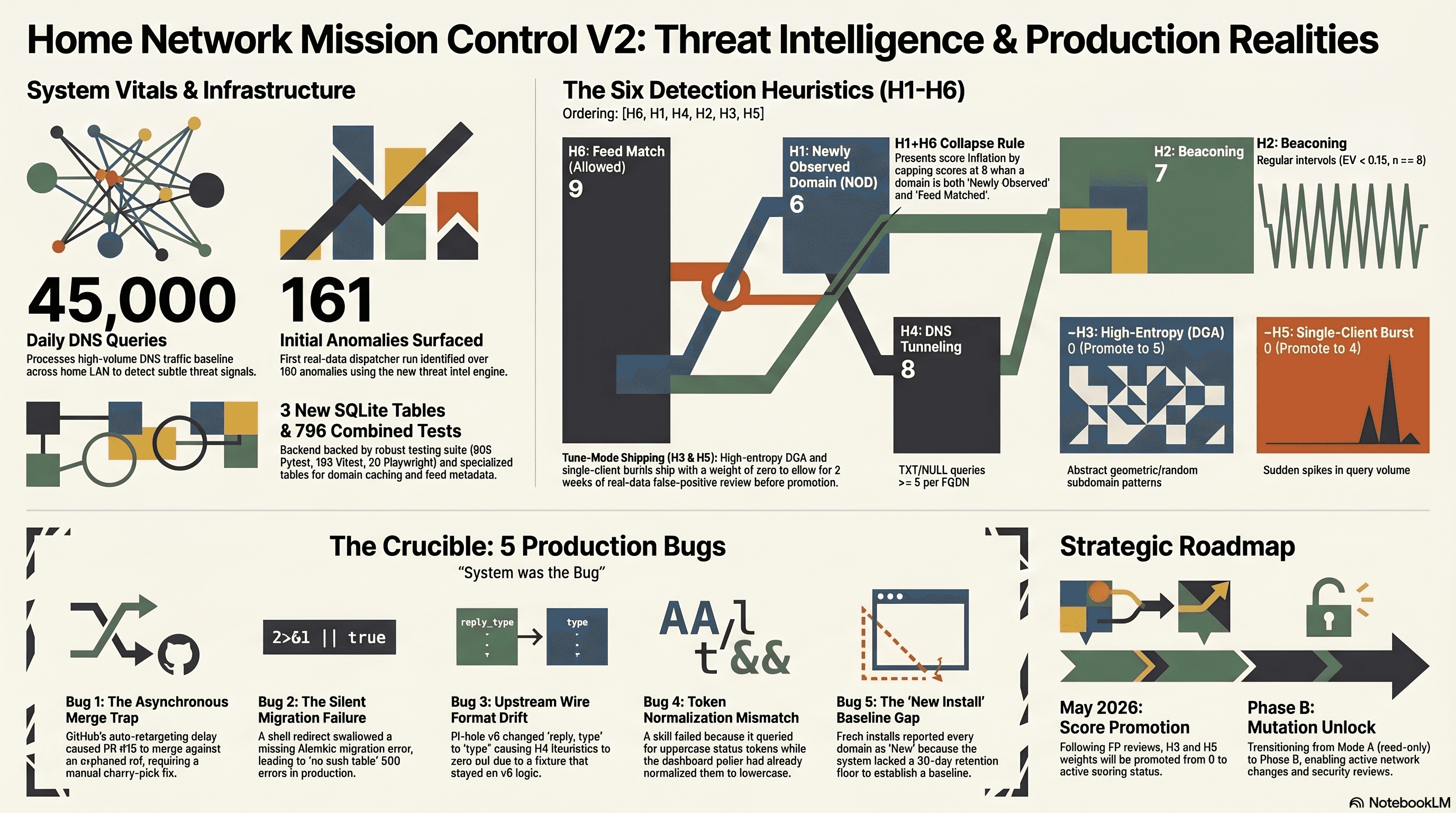
Part 4 of the home network dashboard build. V2 ships a Threat Intelligence tab with 6 in-house heuristics, two free public feeds (URLhaus + Hagezi), and an on-demand RDAP/IPinfo enrichment skill. 161 anomalies surfaced from 45,000 daily DNS queries on the dispatcher's first real-data run. Seven PRs, 603 backend tests, 163 Vitest, 20 Playwright at merge. The marquee story is not the feature, it is the post-merge audit: five bugs that all four CI jobs missed, all five caught only after the dashboard hit production. The gap between "tests pass" and "production works" has a shape and a price, and this post itemizes both.
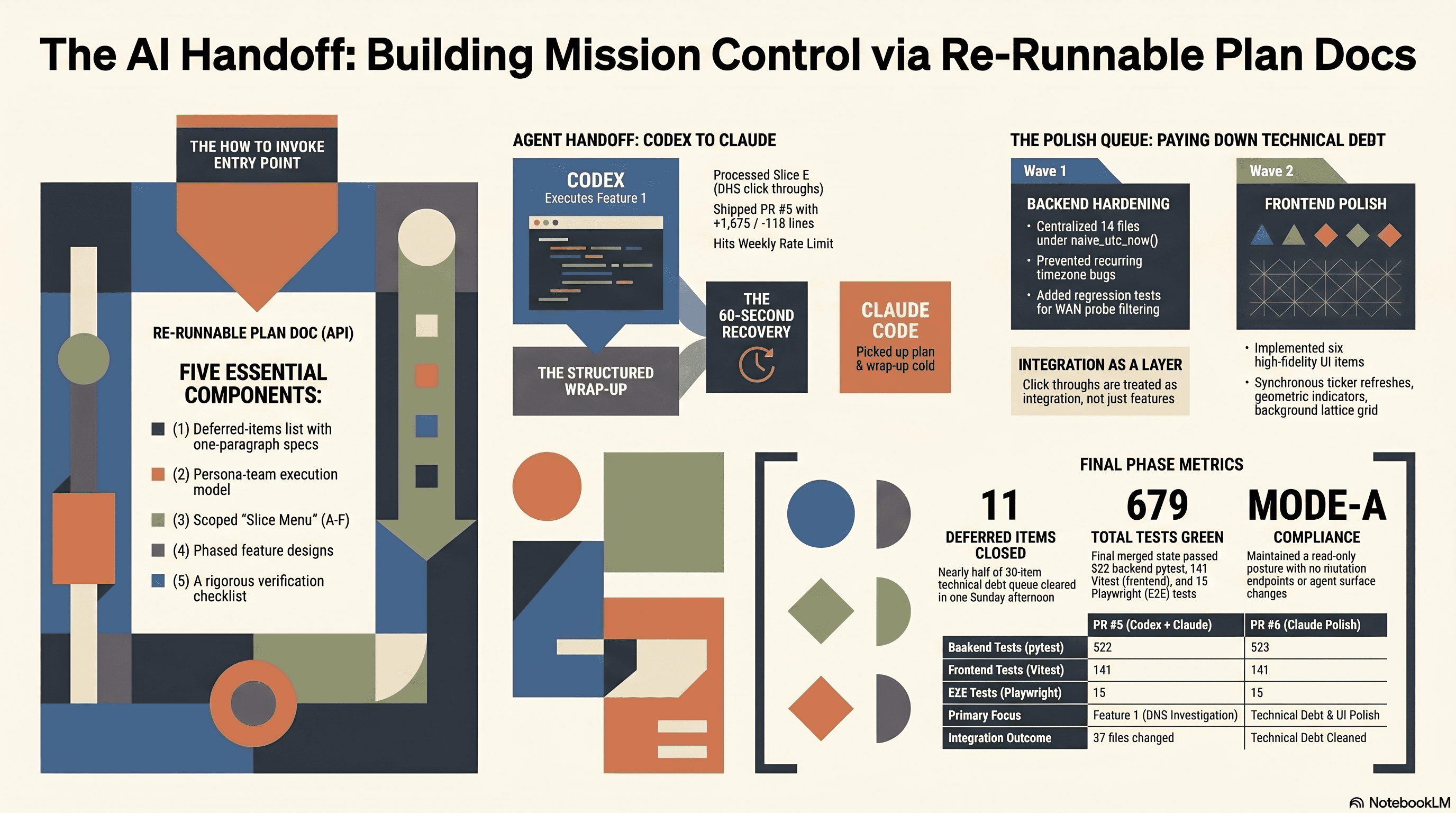
Part 3 of the home network dashboard build. 11 deferred items closed in one session. Two PRs merged the same day. OpenAI Codex shipped Feature 1 phases 1.1-1.3 from a re-runnable plan doc, then hit its weekly $20 ChatGPT Plus rate limit. Claude Code picked up where Codex left off, fixed CI, closed a PII consistency gap on the new domain endpoint, and merged PR #5. The same Claude session then swept 11 more deferred items from the same plan doc into PR #6. 523 backend tests, 141 Vitest, 15 Playwright at the end. The through-line is the plan doc, not the agent that read it.
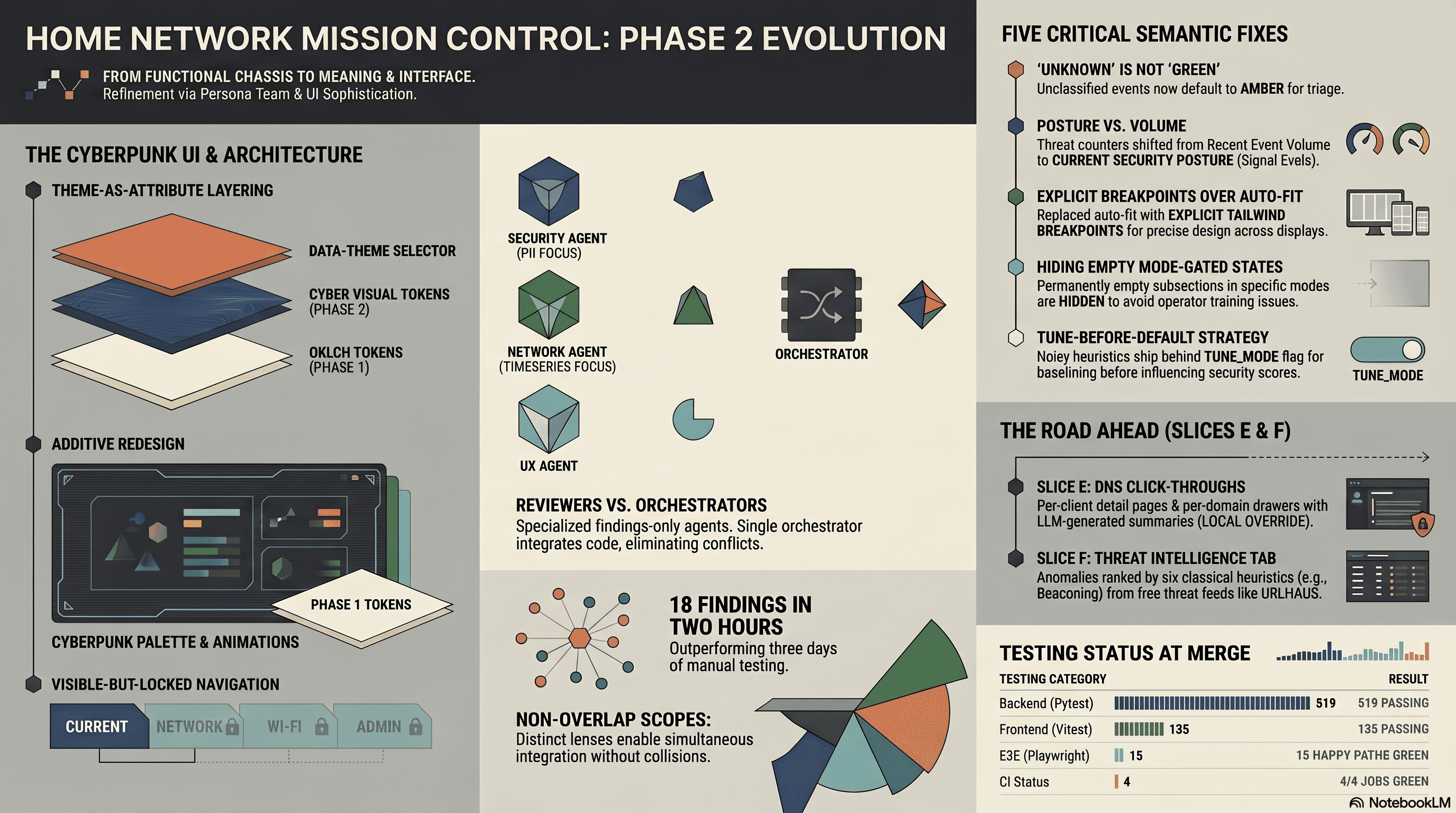
Part 2 of the home network dashboard build with Claude Code. One persona-team session ported a cyberpunk redesign onto Phase 1, surfaced 18 actionable findings across four reviewer dispatches, fixed every one in the same session, and produced fully phased plans for two future features (DNS click-throughs and a Threat Intelligence tab) on the way out. 519 backend tests, 135 Vitest, 15 Playwright, all green at merge. The through-line is the reviewer-only persona team, not the skin.
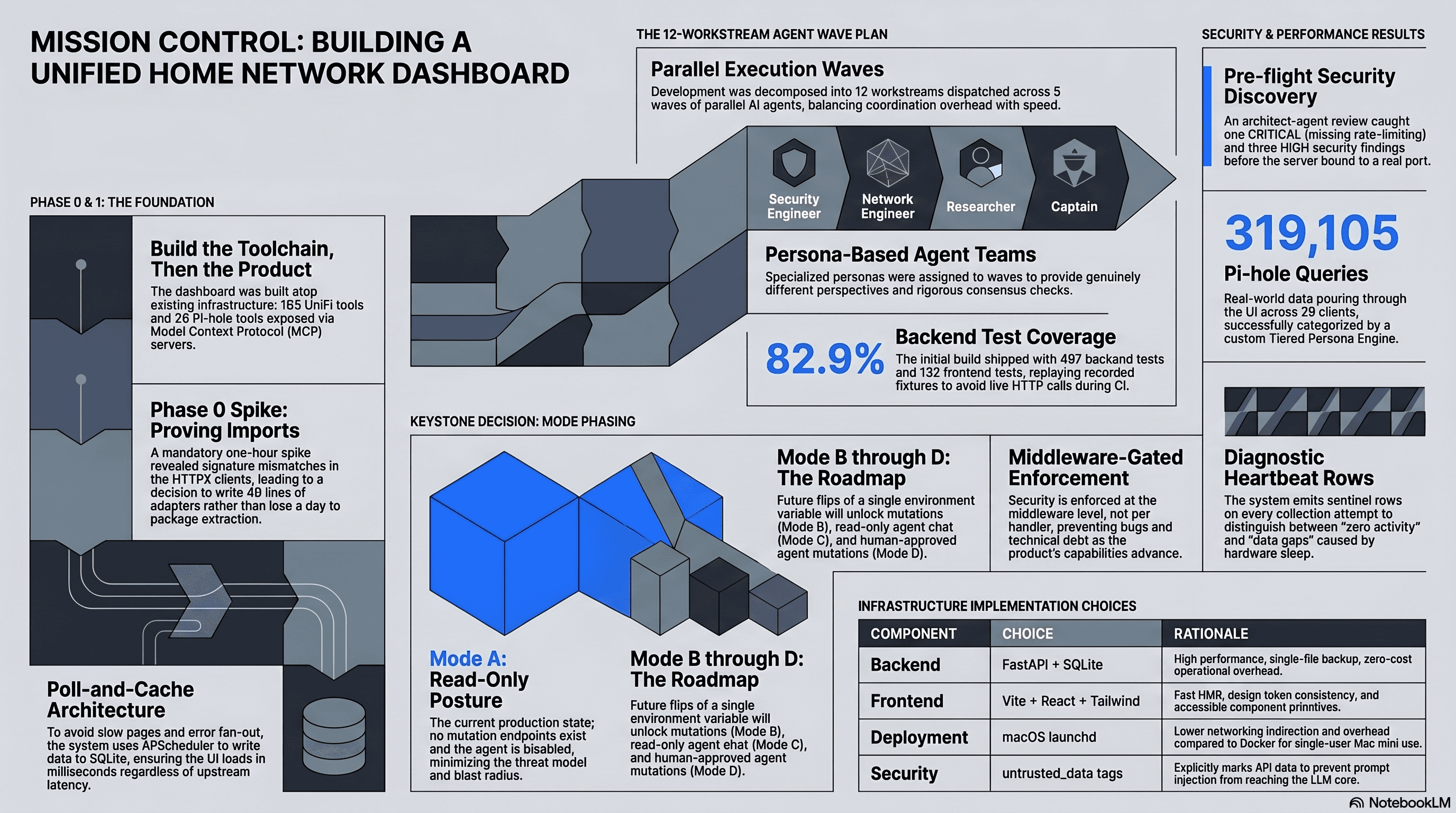
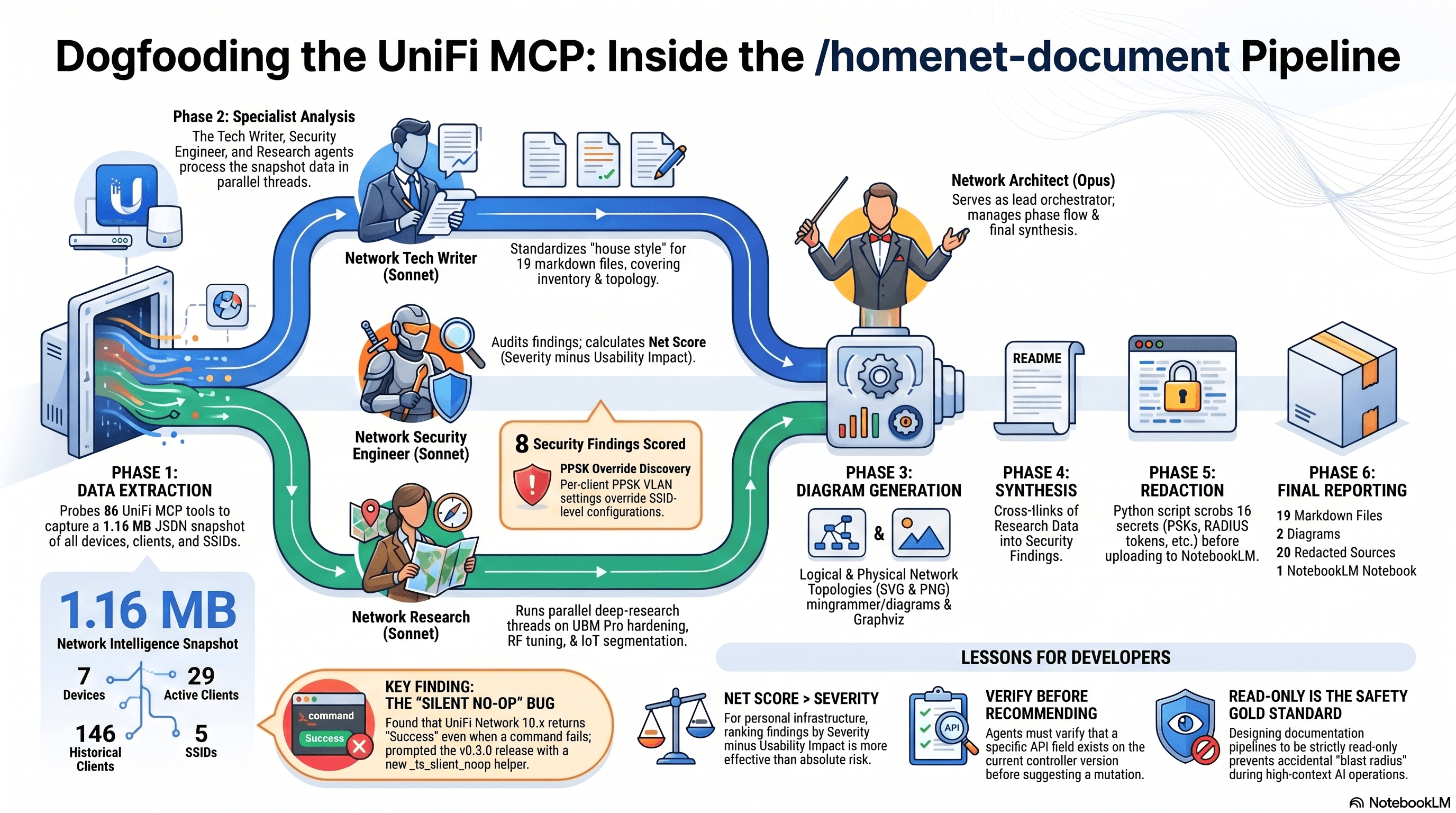
Part 1 of a multi-phase build: a single pane of glass for my UDM Pro, Pi-hole, and UniFi Protect home lab, written entirely with Claude Code. 12 parallel workstreams, four enrichment waves on top, 497 backend tests at 82.9 percent coverage, 132 frontend tests. One CRITICAL plus three HIGH security findings caught and fixed in review. The whole thing rests on the UniFi MCP, Pi-hole MCP, and persona-team patterns shipped in earlier posts; Phase 2 layers a cyberpunk skin on top of it.
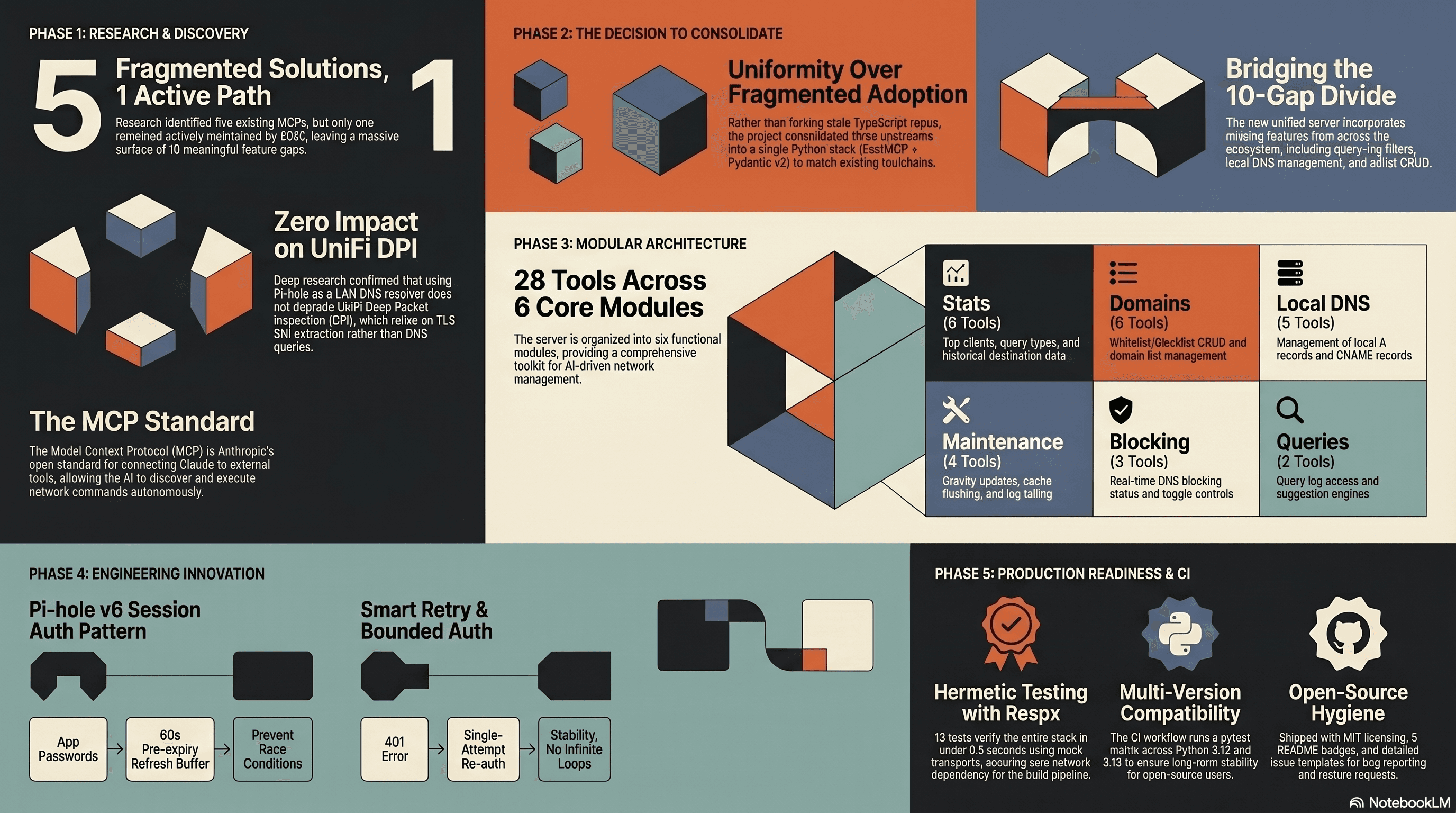
5 existing Pi-hole MCPs. 1 actively maintained. 10 real gap items. I used /deep-research to scan the landscape, then consolidated 28 tools from three upstream repos into one Python FastMCP server that matches my UniFi MCP stack, and shipped it public with CI, issue templates, and branch protection.
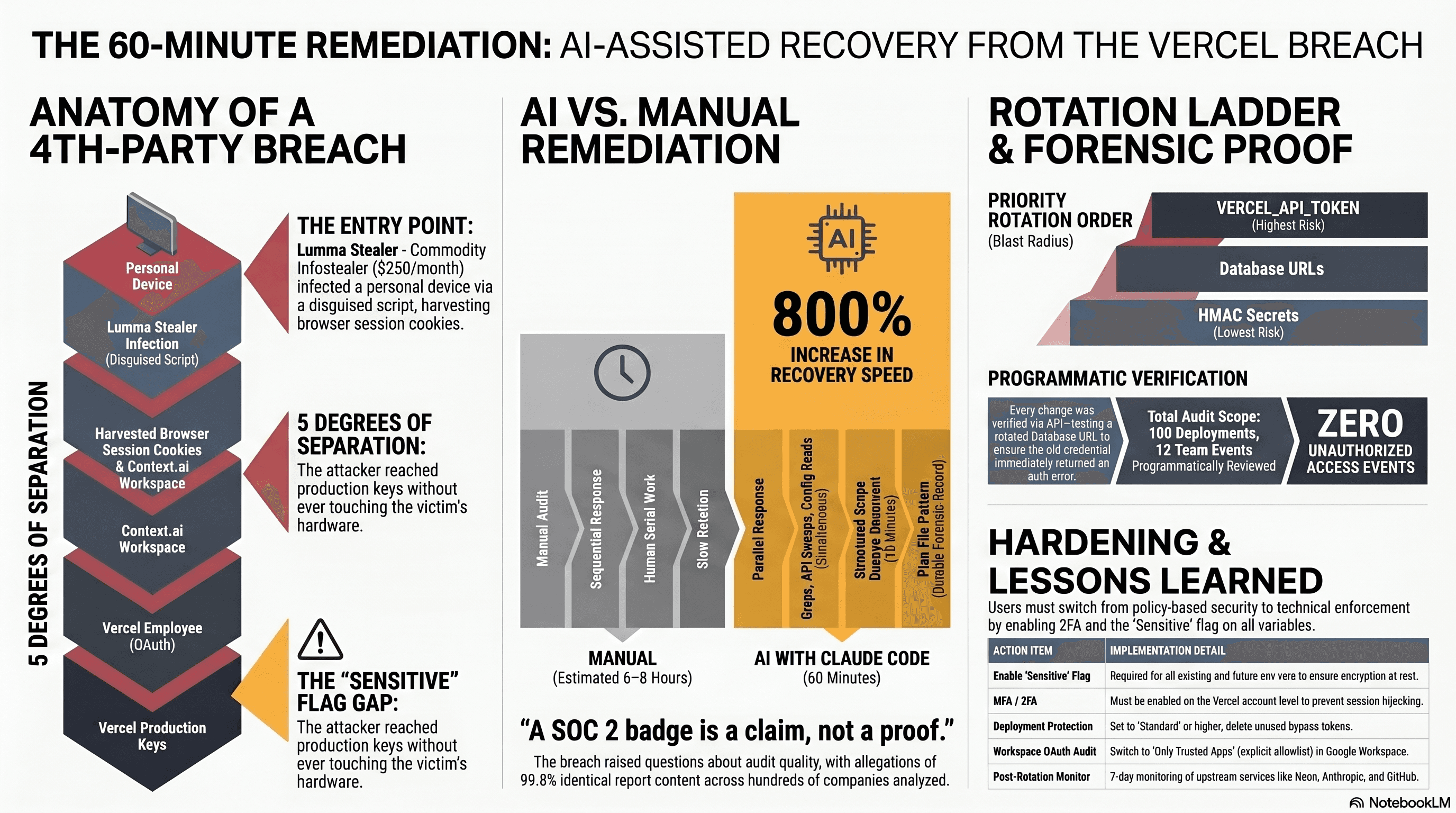
A fourth-party supply-chain breach prompted Vercel to flag nine of my production credentials for rotation out of an abundance of caution. Twenty minutes after reading the disclosure I was rotating keys, and sixty minutes later I had a full audit and a hardened account. Here is how Claude Code turned a day of incident response into an hour, and why the chain that got here should change how you pick vendors.
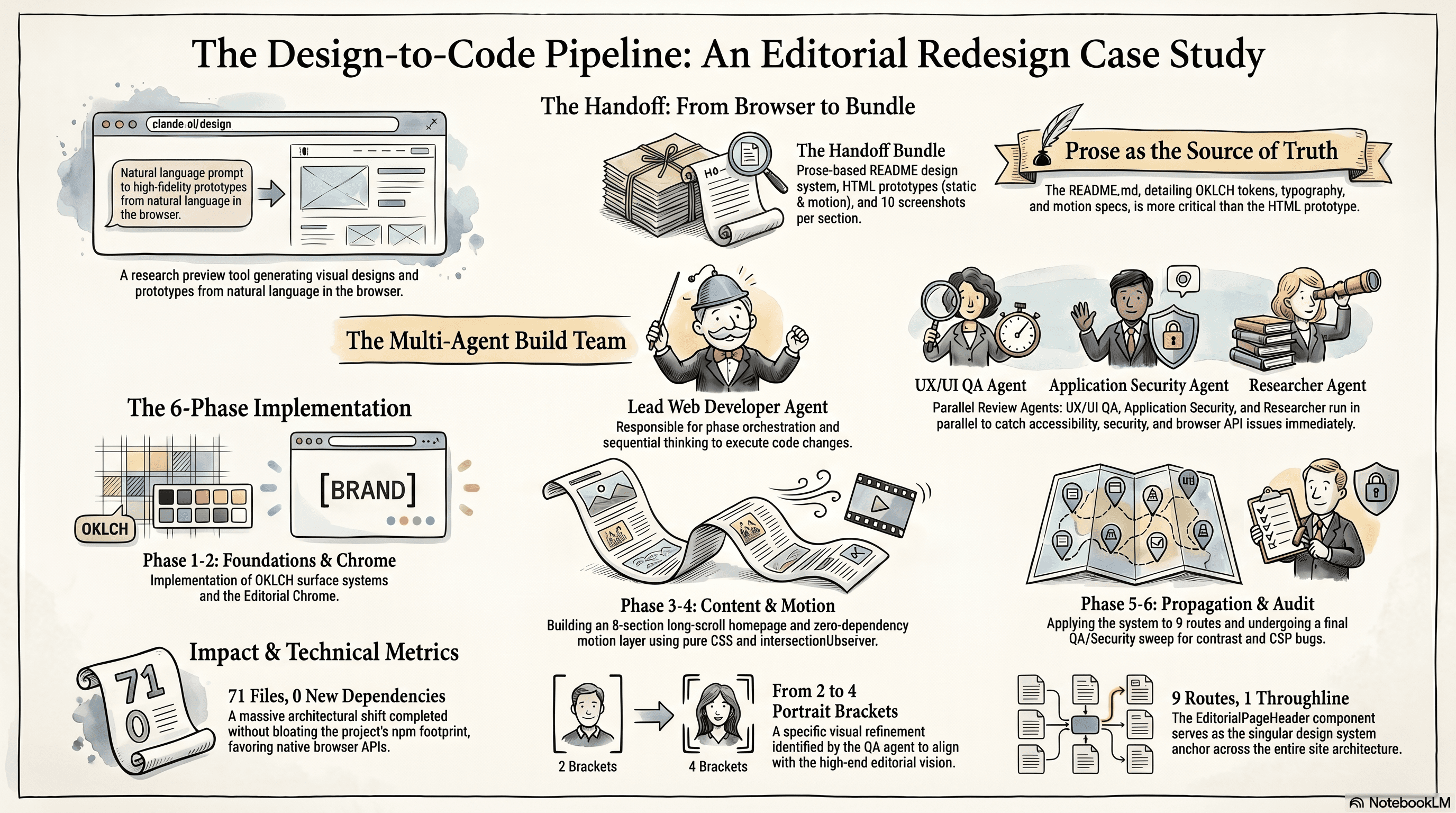
Anthropic launched claude.ai/design the same week I'd been sketching a new look for this site. I did the design work in the browser, exported the handoff bundle, pointed Claude Code at it, and got a production rebuild six phases later with zero new npm dependencies.
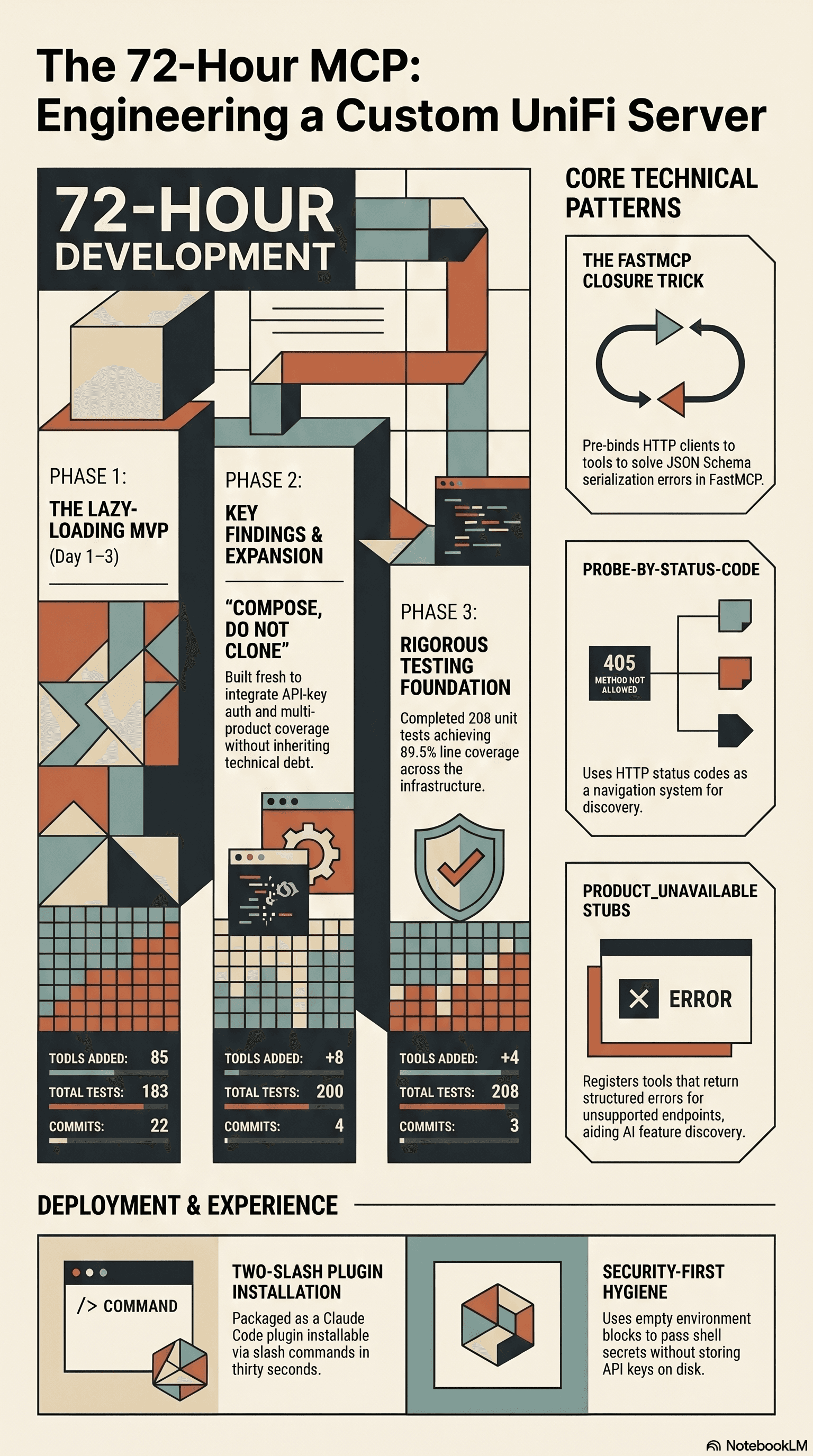
Two open-source UniFi MCP servers existed. Neither did what I wanted. So I built a third that combines their strengths, lazy-loads per product, and ships as a Claude Code plugin you can install with two slash commands.
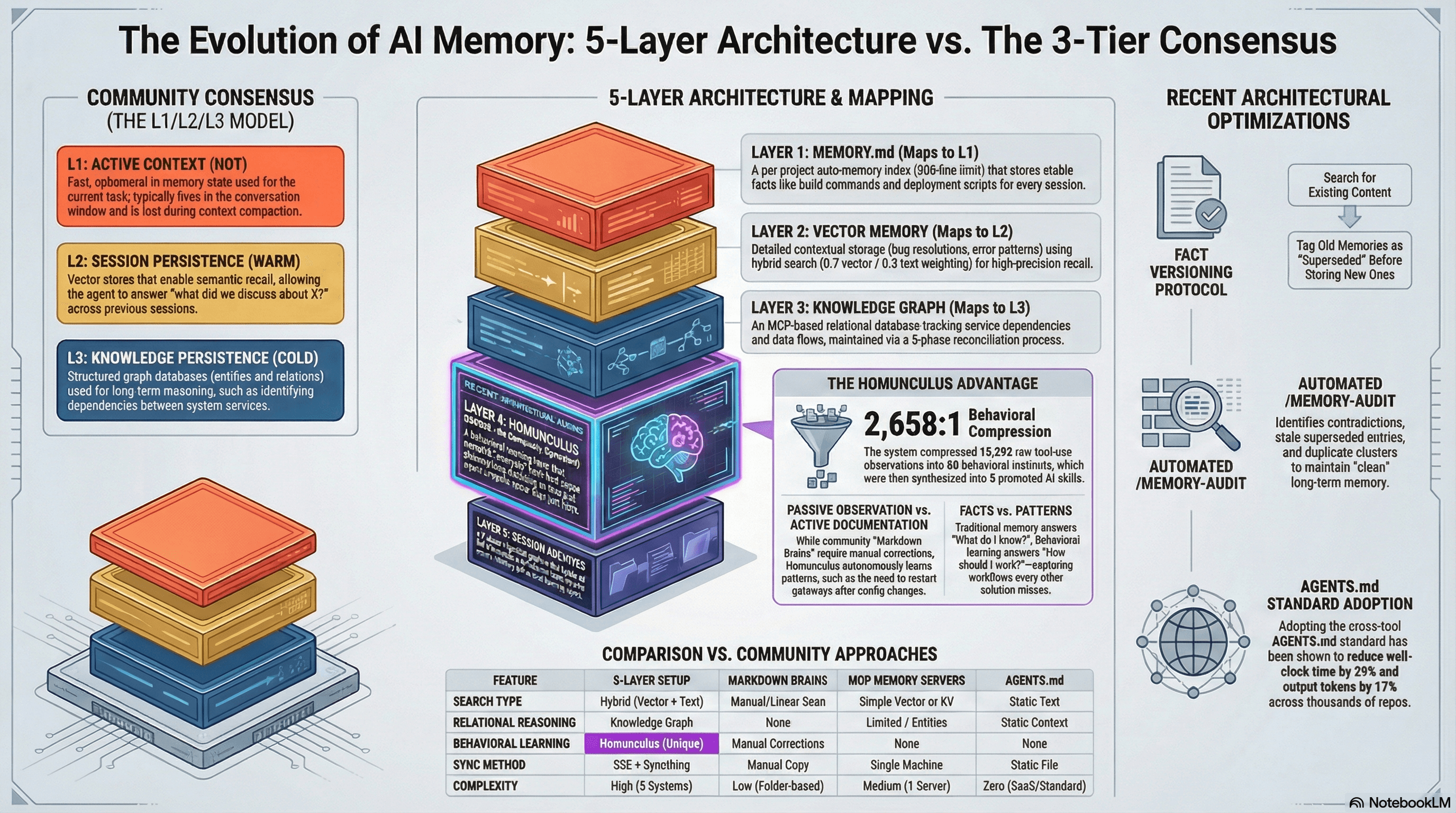
22 sources, 3 parallel research agents, 18 search queries. I pointed my deep research skill at the question every Claude Code power user asks: what's the best way to give an AI persistent memory? Here's what the community is doing, how my setup compares, and the 3 improvements I shipped the same day.
12 community skills evaluated, 35 design rules extracted, 4 knowledge base files created, 5 agents deployed. I built a complete UI/UX design and quality system for Claude Code in a single day.
14 GB free on a 180 GB Mac. Parallel storage scans, a 4-tier classification system, deep research into iMessage's 29 GB local cache, and a reusable /storage-cleanup command. Total reclaimed: 43 GB.
A pairing/admin-approval privilege escalation CVE hit OpenClaw. My security agent ran a threat hunt, my builder agent implemented a Security Panel on the Mission Control dashboard, and 15 files later the system can see itself. Here is the full story.
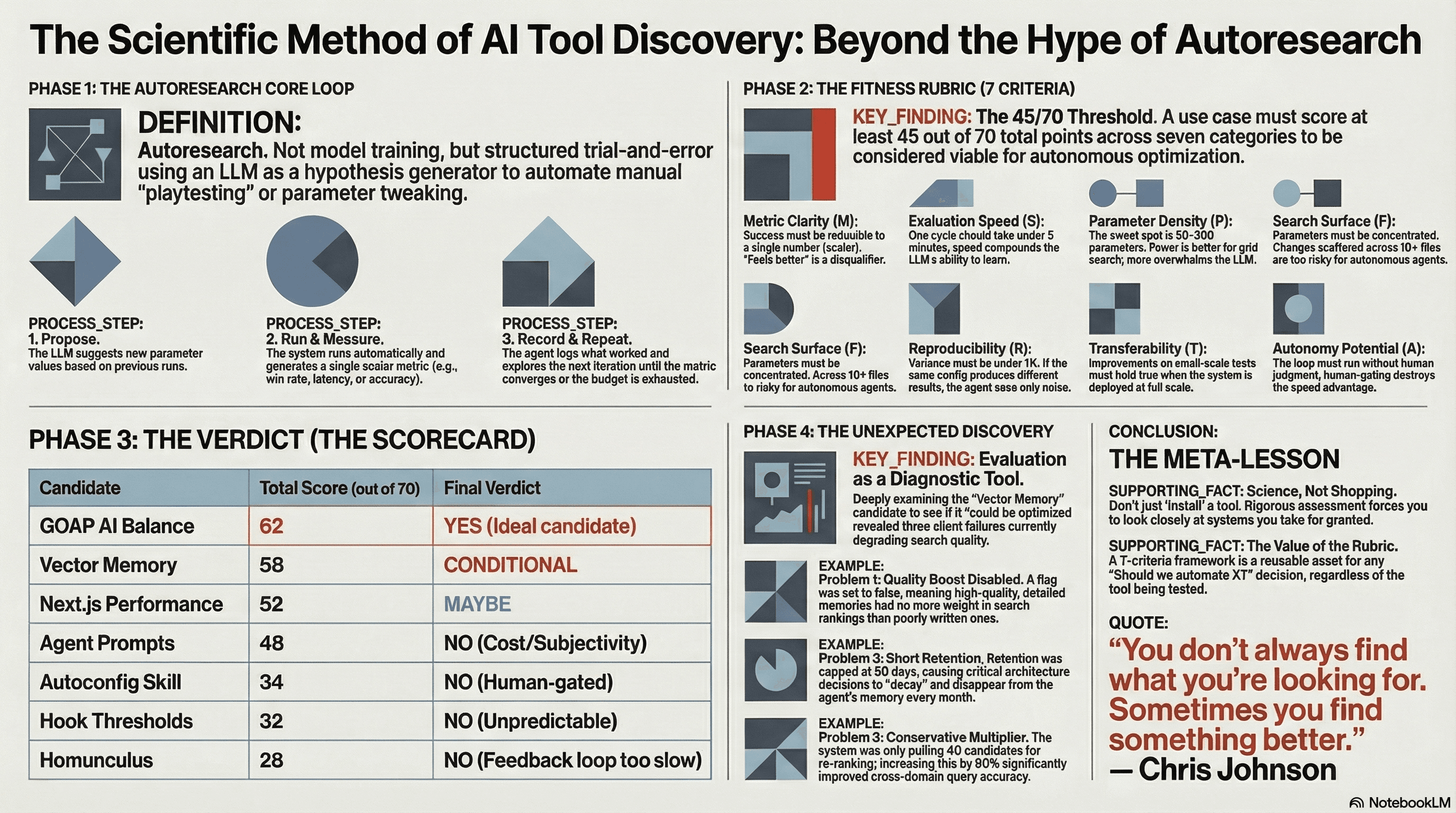
247 game AI parameters, 7 candidate use cases, 5 agents, 1 honest verdict: no. But the research process itself uncovered three real configuration problems in my Vector Memory server that had been silently degrading search quality for weeks.
I wanted a living document for my family, something like a private Wikipedia where we could record accomplishments, life stories, and milestones. Here is the complete blueprint: gathering source material, multi-agent orchestration, a 5-phase pipeline, PII protection, and a one-prompt quick start.
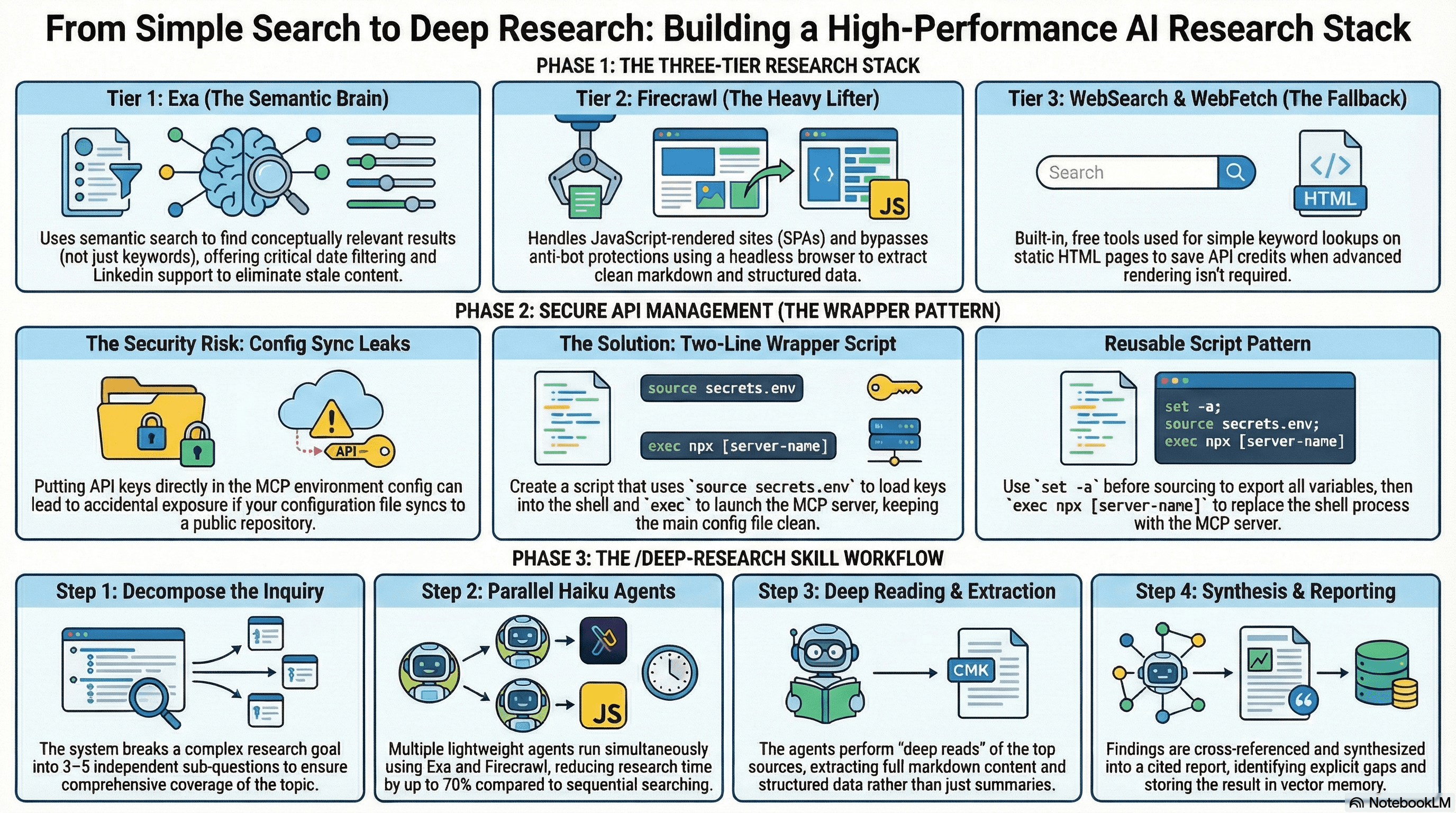
3 test sessions, 2 MCP servers, 1 wrapper script fix. How I added Exa and Firecrawl to Claude Code for semantic search, JS-rendered scraping, and proper deep research capability.
35 MCP tools, 7 implementation tasks, 2 platforms, 1 session. How I used the superpowers brainstorming, writing-plans, and subagent-driven-development pipeline to integrate NotebookLM into Claude Code as a first-class MCP server.
A beginner-friendly guide to the features that make Claude Code powerful: CLAUDE.md, directory structure, permissions, plan mode, checkpoints, skills, hooks, MCP, plugins, context, slash commands, compaction, agents, and rules. Everything you need to know to get started successfully.
50 instincts, 13 semantic clusters, 7 accepted candidates, 5 promoted skills. I built the third tier of a continuous learning pipeline that synthesizes behavioral patterns into reusable agents, skills, and commands.
How I built a full direct-booking vacation rental website for my brother-in-law Terry using Claude Code and a 6-agent AI team: Next.js 16, Supabase, Resend, and a surprisingly capable admin dashboard for a non-technical host.
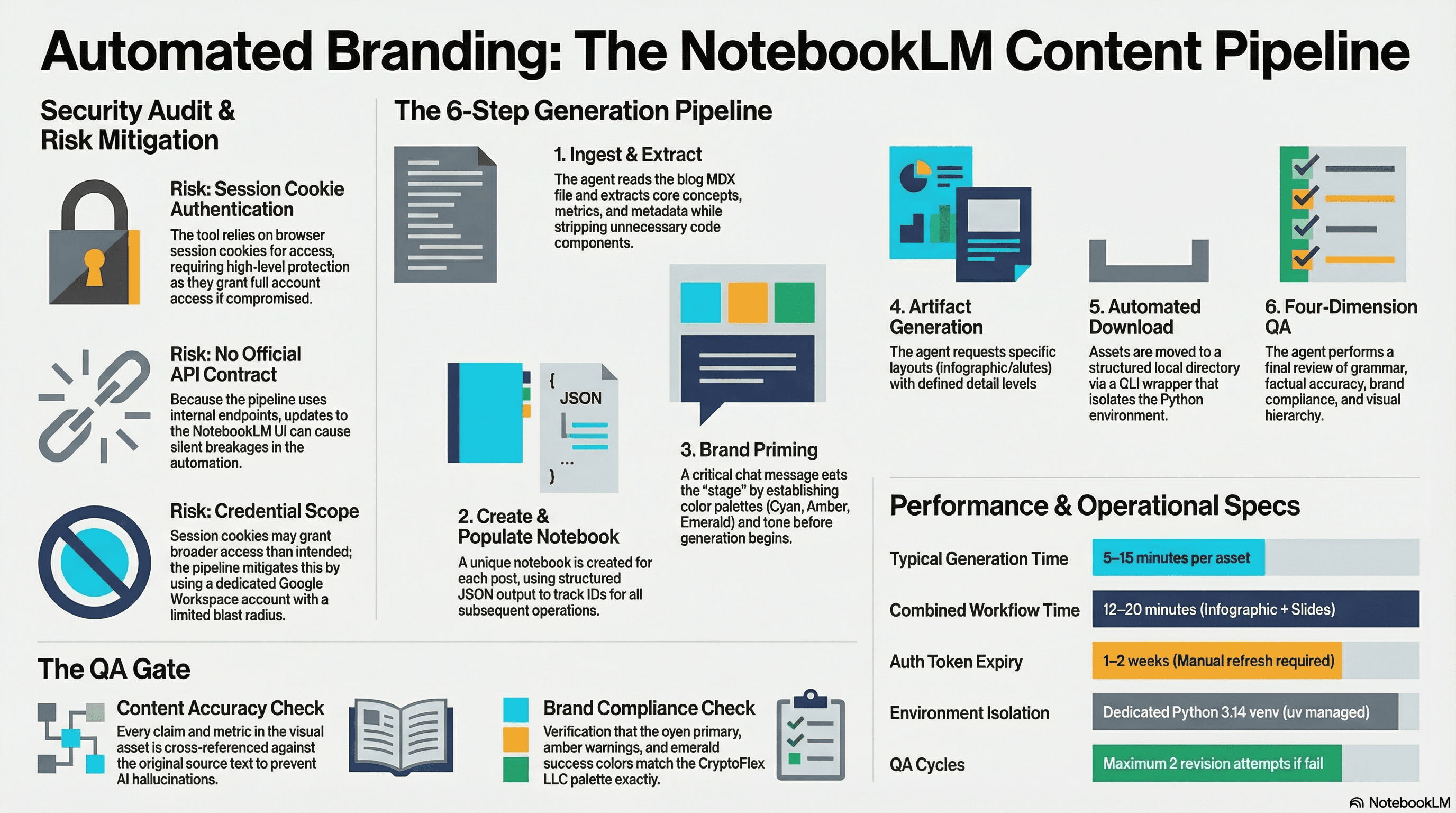
I set up notebooklm-py as a programmatic content creation pipeline for CryptoFlex LLC, building a custom agent and skill that turns blog posts into branded infographics and slide decks with automated QA. Here is how the security review went, what the pipeline looks like, and what I learned about trusting reverse-engineered APIs.
I ran a routine audit on my Gmail agent and discovered the knowledge graph had been completely empty for months, the memory nudge hook had five blind spots, and nothing was catching either problem. Here's what I built to fix it.
I set up the Claude Code iMessage plugin as a proof of concept, debugged two real bugs, and discovered a fundamental security flaw that made me tear the whole thing down. Here's the full story.
Claude Code's /compact command frees up context but destroys in-progress session state. Smart-compact is a custom skill that saves everything before you compact, so you can pick up exactly where you left off.
Building a Gmail cleanup agent in Claude Code, evolving it from a manual 5-step script to a fully autonomous v3 with VIP detection, delta sync, auto-labeling, and follow-up tracking. Then making it run unattended every 5 hours via scheduled triggers and a remote-control daemon on a Mac Mini.
Three ways to run Claude Code remotely. I tried Dispatch, Channels, and Remote Control. Here's what broke, what worked, and why I landed on Remote Control with Warp terminal on my always-on Mac Mini.
I tried to schedule my gmail-assistant agent via Dispatch, then discovered Channels and Remote Control solve the problem differently. Here's how all three compare for mobile-triggered local automation.
How I replaced three separate Google Workspace MCP integrations with a single gws CLI skill, why CLI beats MCP for large API surfaces, and the four-tier safety system that keeps destructive operations from running without confirmation.
Building a pixel-art retro dashboard to command 7 AI agents on an M4 Mac Mini: System Health, Agent Fleet, Team org chart with role card modals, Telegram monitoring, cron jobs, and more.
A deep dive into OpenClaw's three-tier memory system: hybrid search with nomic-embed-text embeddings, temporal decay, sqlite-vec vector storage, and the full configuration that makes agents remember across sessions.
A technical deep-dive into rebuilding a 1990 Windows 3.1 artillery game as a modern web app with Next.js 15, Canvas 2D, Web Audio synthesis, 6 weapons, 4 terrain biomes, AI personality, and a tri-specialist security audit. From empty repo to 20-feature modernization in two sessions.
A practical walkthrough of the 5 Node.js MCP servers I run with Claude Code: sequential-thinking, memory, context7, github, and project-tools. What they do, how to configure them on Windows, and what I learned testing each one.
How a single commit across 58 files added audio, branching tech trees, fleet stances, galaxy types, diplomacy treaties, and 22 achievements to Third Conflict. Everything kept green the whole way.
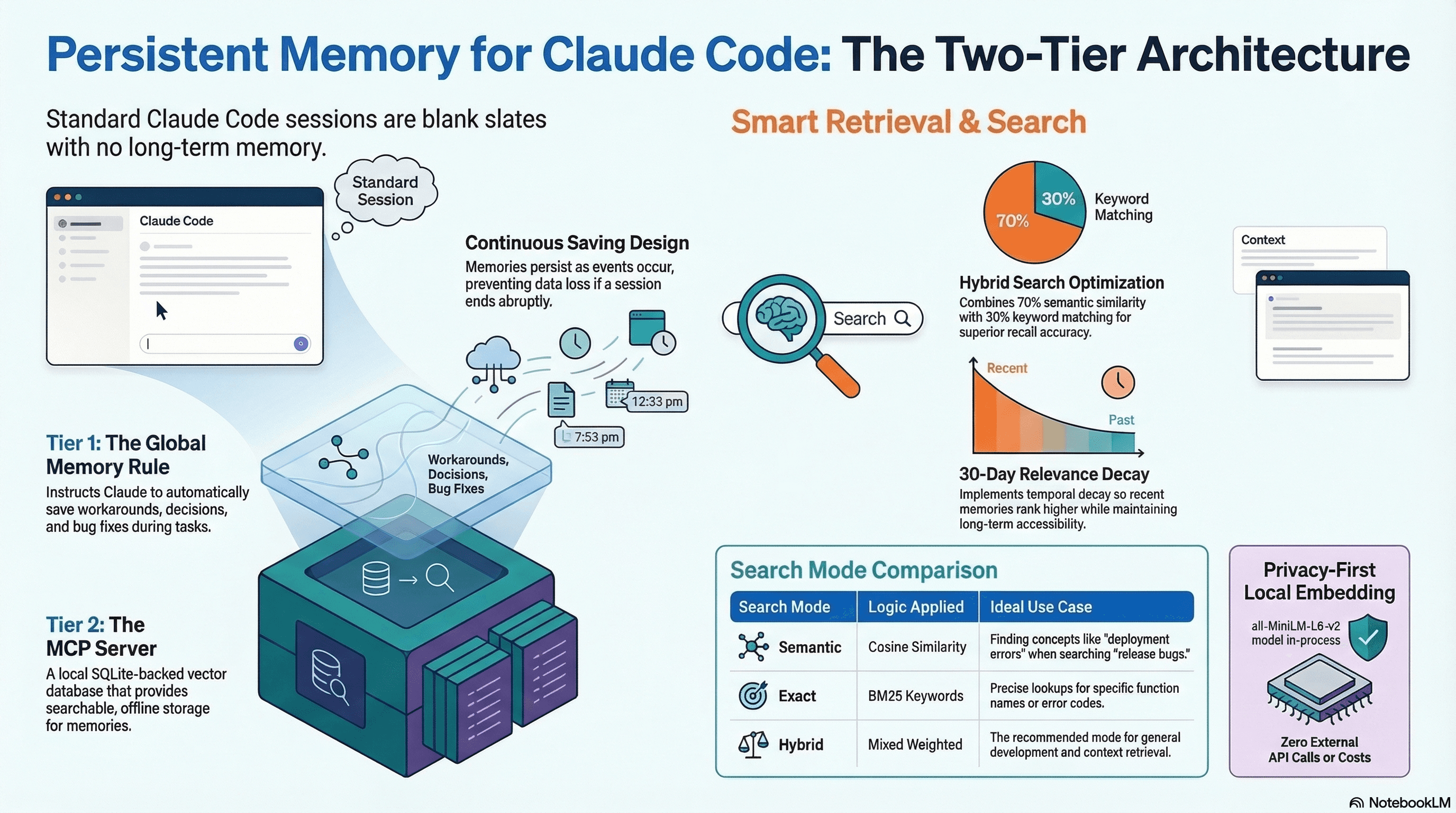
How to give Claude Code real persistent memory using a global rule file and a vector database MCP server, so context survives across sessions without any manual effort.
After Part 1's fortress locked itself out, I rebuilt OpenClaw incrementally: one security control at a time, with 7 agents, 6 Telegram bots, and verification after every step.
I used a team of 5 AI security agents to build a hardened OpenClaw deployment on my M4 Mac Mini. After implementing every security control imaginable, nothing worked. Here is what happened, why I did not quit, and what I planned instead.
How I turned a functional web port of a 1991 game into a full-featured modern 4X strategy game across four feature phases and a wiring plan, using Claude Code as the primary development engine.
Three features that turned a static blog into something closer to a content platform: draft staging via GitHub API, threaded comment replies, and a swipeable LinkedIn carousel built in React.
I reviewed an AI-generated recommendation to convert my custom agents into 'captains' that spawn parallel sub-agents. Here's what I learned about factual assessment, corrected parallel structures, sandbox constraints, and when to use this pattern (or keep it simple).
A technical walkthrough of 16 site improvements shipped in a single Claude Code session: reading progress bars, dark mode, fuzzy search, a contact form, code playgrounds, a guestbook, achievement badges, and more.
How I cataloged 13 custom agents, 23 learned skills, 10 rules, 8 bash scripts, and 2 MCP servers into a searchable, filterable showcase page for my blog. One session. One new route. One background research agent doing the heavy lifting.
What happens when a 5-agent security team audits a client-side browser game? 26 findings, a 'God Mode in 30 seconds' attack chain, and 4 parallel developers shipping every fix before the coffee got cold.
What happens when you ship 90% context reduction in the morning and build a full backlog staging system by afternoon? A look at a typical day building with Claude Code.
How I used Claude Code and four parallel AI agents to rebuild Second Conflict, a forgotten 1991 Windows 3.0 space strategy game, as a modern web app. Complete with reverse-engineered game mechanics, 261 passing tests, and more nostalgia than I knew what to do with.
How a basic page-view tracker evolved into a 9-section, 26-component analytics command center with heatmaps, scroll depth tracking, bot detection, and API telemetry. Includes the reasoning behind every upgrade and enough puns to make a data scientist groan.
From 70K tokens per session to 7K. A 7-agent audit, 23 evaluation documents, 11 component scorecards, 5 optimization patterns, and an 8-agent implementation team. This is the full story of cutting context consumption by 90%.
One cybersecurity nerd, one AI coding assistant, one week, 117 commits, 24 pull requests, 17 blog posts, 410 tests at 98% coverage. This is the story of building a production website from scratch with Claude Code, including every mistake, meltdown, and meme along the way.
A 5-agent team chewed through a week of Claude Code session logs and surfaced patterns I never would have found manually. Including the revelation that my worst day wasn't actually that bad.
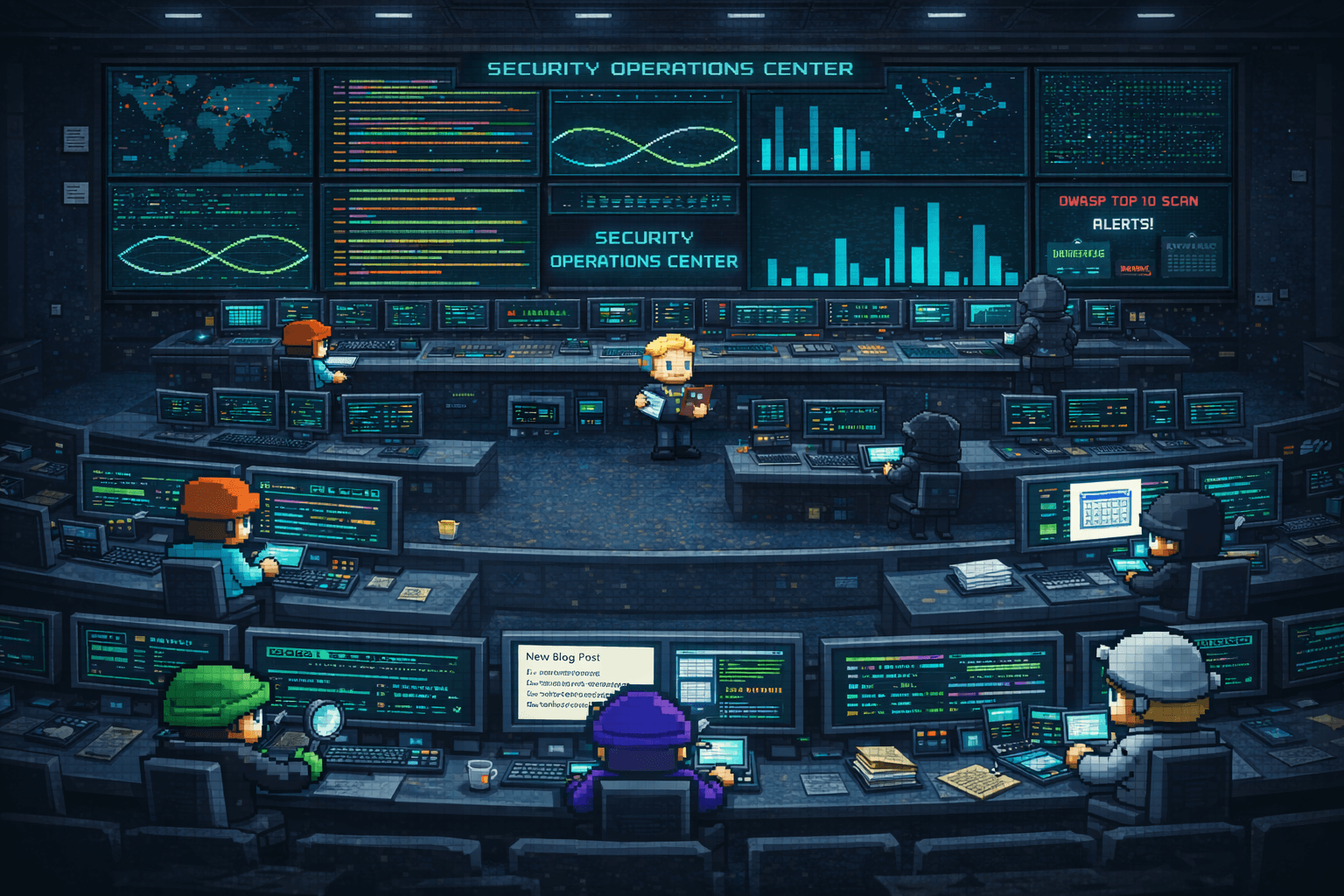
I tasked four AI agents with auditing my production site for OWASP vulnerabilities. They found 16 findings, fixed 6, and wrote 37 tests in under 30 minutes. Traditional pentesting may never be the same, but red teamers shouldn't worry.
How I made each weekly digest newsletter unique by using Claude Haiku to generate two-paragraph intros with historical tech facts, holiday callouts, and graceful fallback when the API fails.
A comprehensive configuration overhaul that transformed my Claude Code workflow from serial execution to parallel agent orchestration. 7 custom agents, 9 rules reorganized, file protection hooks, and the philosophy of why every AI-assisted developer should go agentic-first.
How I built a subscriber-gated comment system with thumbs up/down reactions, admin moderation, and a one-time welcome email blast, including the PowerShell quirks and Vercel WAF rules that nearly blocked everything.
How I built a full newsletter system for this site with secure subscriptions, HMAC-verified unsubscribes, branded HTML emails, and a Vercel Cron that sends a weekly digest every Monday. Includes the WAF rule that broke everything and the firewall tightening that followed.
A technical deep-dive into implementing production-grade SEO for a Next.js site, covering dynamic sitemaps, JSON-LD structured data, OpenGraph, Twitter Cards, RSS feeds, canonical URLs, and everything Google needs to actually find your website.
A technical deep dive into notification hooks, terminal bell protocols, and why playing a simple sound required understanding BEL characters, OSC sequences, and Windows API calls.
A security professional audits his own code: blog posts leaking private repo names, query-string secrets in browser history, SSRF vectors, and error messages handing attackers the database schema. 19 findings and the journey to fix every one.
How I built a custom analytics system with interactive visualizations, IP intelligence, and a Leaflet world map, using Next.js, Neon Postgres, and Claude Code. Includes the full Vercel Analytics integration and why custom tracking fills the gaps.
How I built a 12-step /wrap-up slash command that automates end-of-session documentation across multiple repos - pulling latest, extracting learned skills, cleaning global state, updating changelogs, committing in Hulk Hogan's voice, and pushing. A step-by-step breakdown of every function and why it exists.
A detailed, hour-by-hour account of my first day with Claude Code - starting with Ollama frustrations, discovering Opus 4.6, building a complete website, and deploying to production. 30 commits, 4 repositories, and one very long day.
A deep dive into configuring Claude Code for real-world use - from modular rules and session logging hooks to MCP servers and the everything-claude-code plugin ecosystem.
A detailed, step-by-step guide to vibe coding a production website from the ground up using Claude Code, from someone whose last website ran on Apache with hand-written HTML. Every service, every config, every command.
My journey from running Ollama with Qwen locally (too slow) to setting up an Anthropic account and discovering Claude Code - the AI CLI tool that changed how I build software.