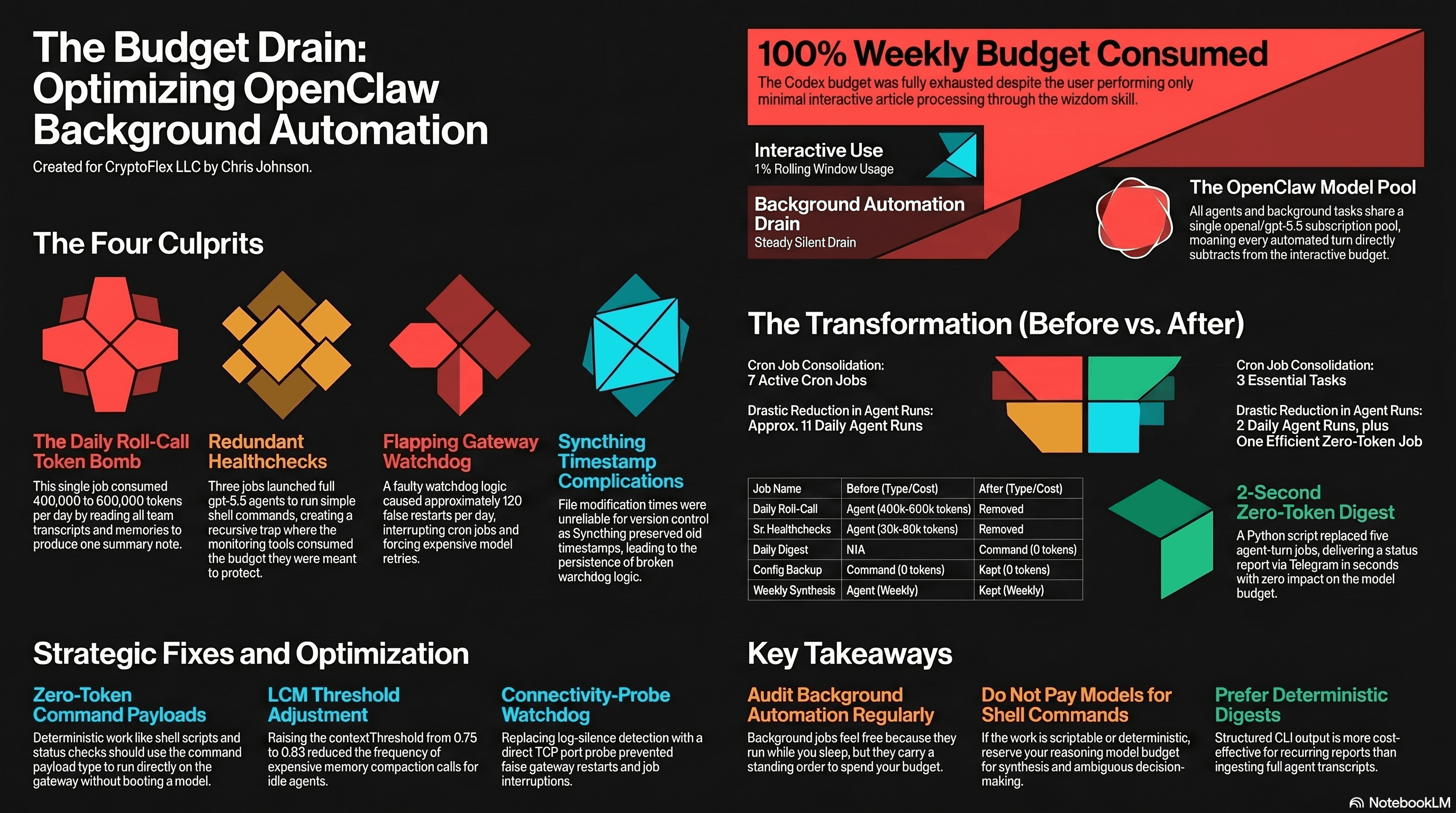
A weekly OpenAI Codex subscription cap hit 100% despite minimal interactive use. The culprit: 7 background cron jobs spinning up full gpt-5.5 agents for work a shell script could do, plus a roll-call job consuming 400,000-600,000 tokens per day. Fixing it meant a before/after cron inventory that went from 11 daily agent runs to 2, plus a zero-token digest command that works even when the cap is exhausted.
14 GB free on a 180 GB Mac. Parallel storage scans, a 4-tier classification system, deep research into iMessage's 29 GB local cache, and a reusable /storage-cleanup command. Total reclaimed: 43 GB.
50 instincts, 13 semantic clusters, 7 accepted candidates, 5 promoted skills. I built the third tier of a continuous learning pipeline that synthesizes behavioral patterns into reusable agents, skills, and commands.
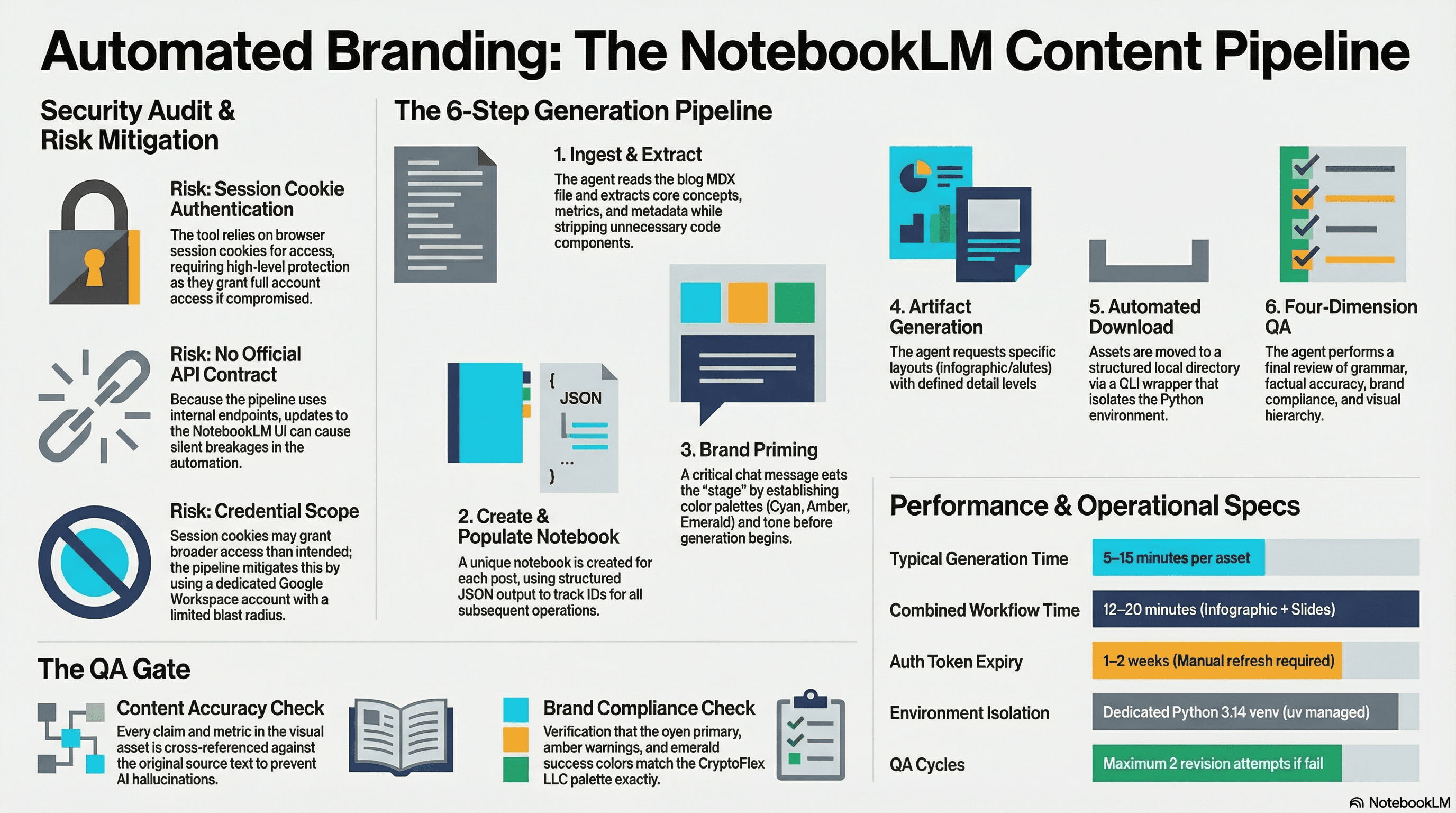
I set up notebooklm-py as a programmatic content creation pipeline for CryptoFlex LLC, building a custom agent and skill that turns blog posts into branded infographics and slide decks with automated QA. Here is how the security review went, what the pipeline looks like, and what I learned about trusting reverse-engineered APIs.
Building a Gmail cleanup agent in Claude Code, evolving it from a manual 5-step script to a fully autonomous v3 with VIP detection, delta sync, auto-labeling, and follow-up tracking. Then making it run unattended every 5 hours via scheduled triggers and a remote-control daemon on a Mac Mini.
I tried to schedule my gmail-assistant agent via Dispatch, then discovered Channels and Remote Control solve the problem differently. Here's how all three compare for mobile-triggered local automation.
How I built a 12-step /wrap-up slash command that automates end-of-session documentation across multiple repos - pulling latest, extracting learned skills, cleaning global state, updating changelogs, committing in Hulk Hogan's voice, and pushing. A step-by-step breakdown of every function and why it exists.