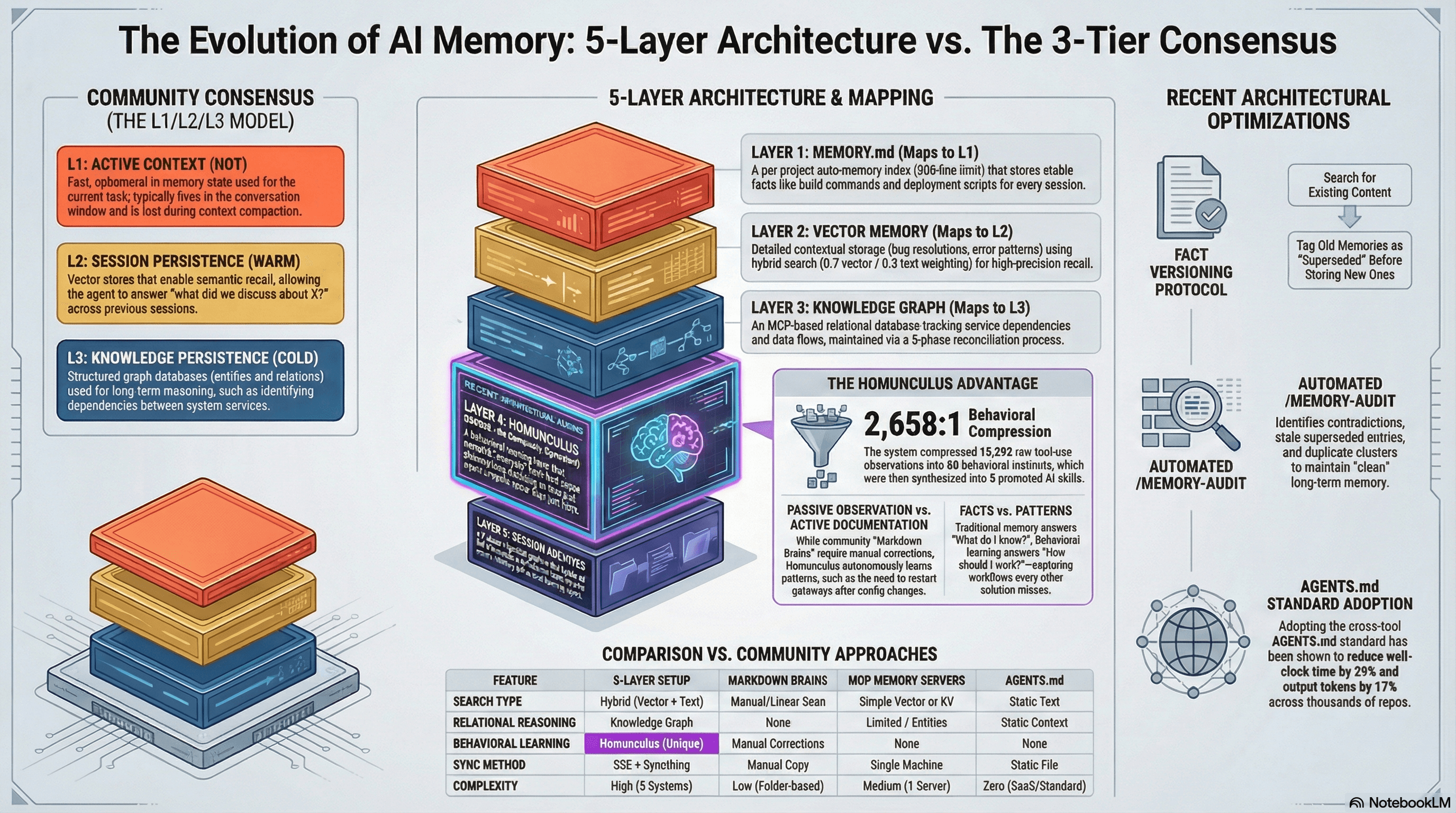
22 sources, 3 parallel research agents, 18 search queries. I pointed my deep research skill at the question every Claude Code power user asks: what's the best way to give an AI persistent memory? Here's what the community is doing, how my setup compares, and the 3 improvements I shipped the same day.
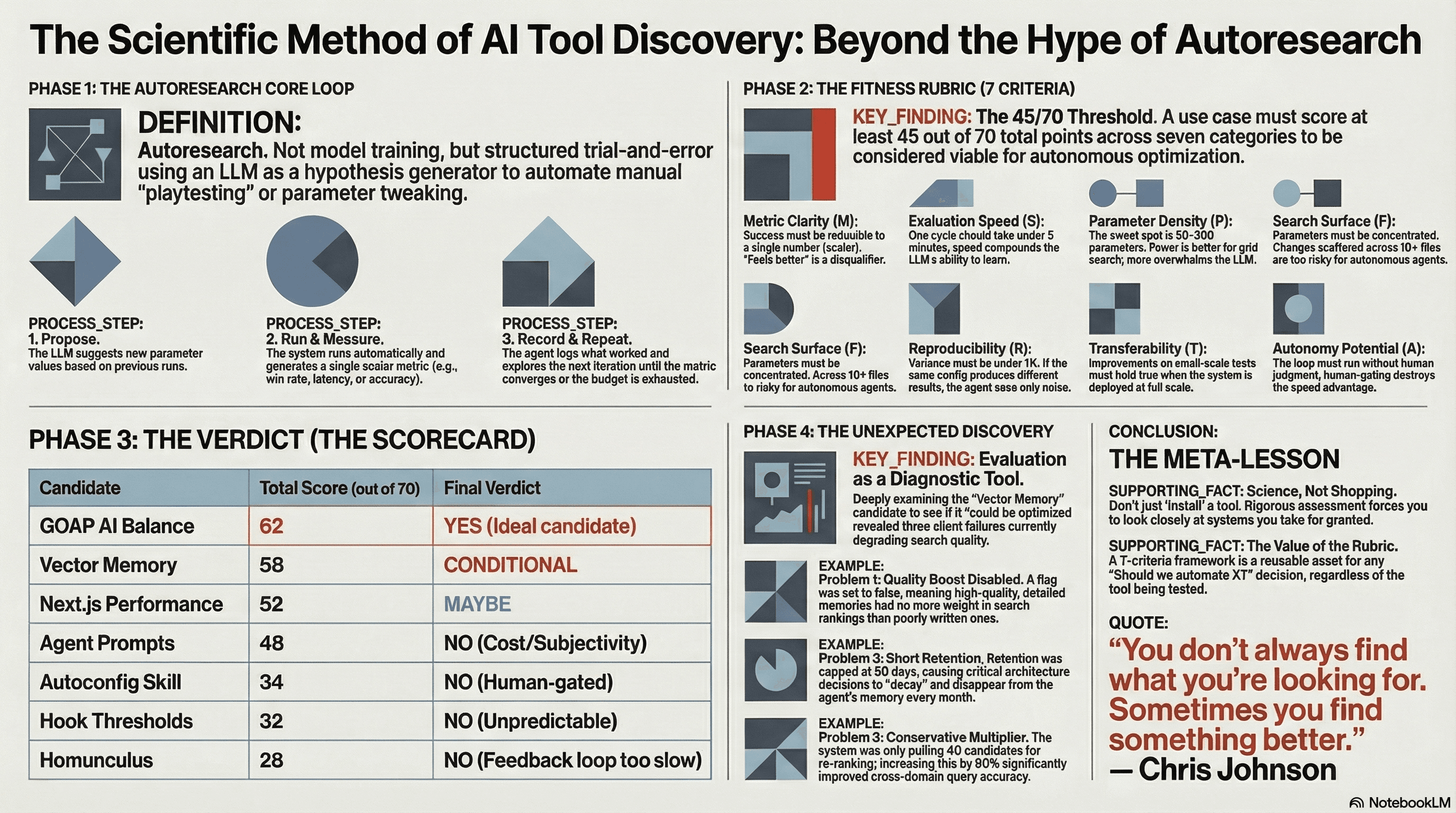
247 game AI parameters, 7 candidate use cases, 5 agents, 1 honest verdict: no. But the research process itself uncovered three real configuration problems in my Vector Memory server that had been silently degrading search quality for weeks.
50 instincts, 13 semantic clusters, 7 accepted candidates, 5 promoted skills. I built the third tier of a continuous learning pipeline that synthesizes behavioral patterns into reusable agents, skills, and commands.
I ran a routine audit on my Gmail agent and discovered the knowledge graph had been completely empty for months, the memory nudge hook had five blind spots, and nothing was catching either problem. Here's what I built to fix it.
Claude Code's /compact command frees up context but destroys in-progress session state. Smart-compact is a custom skill that saves everything before you compact, so you can pick up exactly where you left off.
A deep dive into OpenClaw's three-tier memory system: hybrid search with nomic-embed-text embeddings, temporal decay, sqlite-vec vector storage, and the full configuration that makes agents remember across sessions.
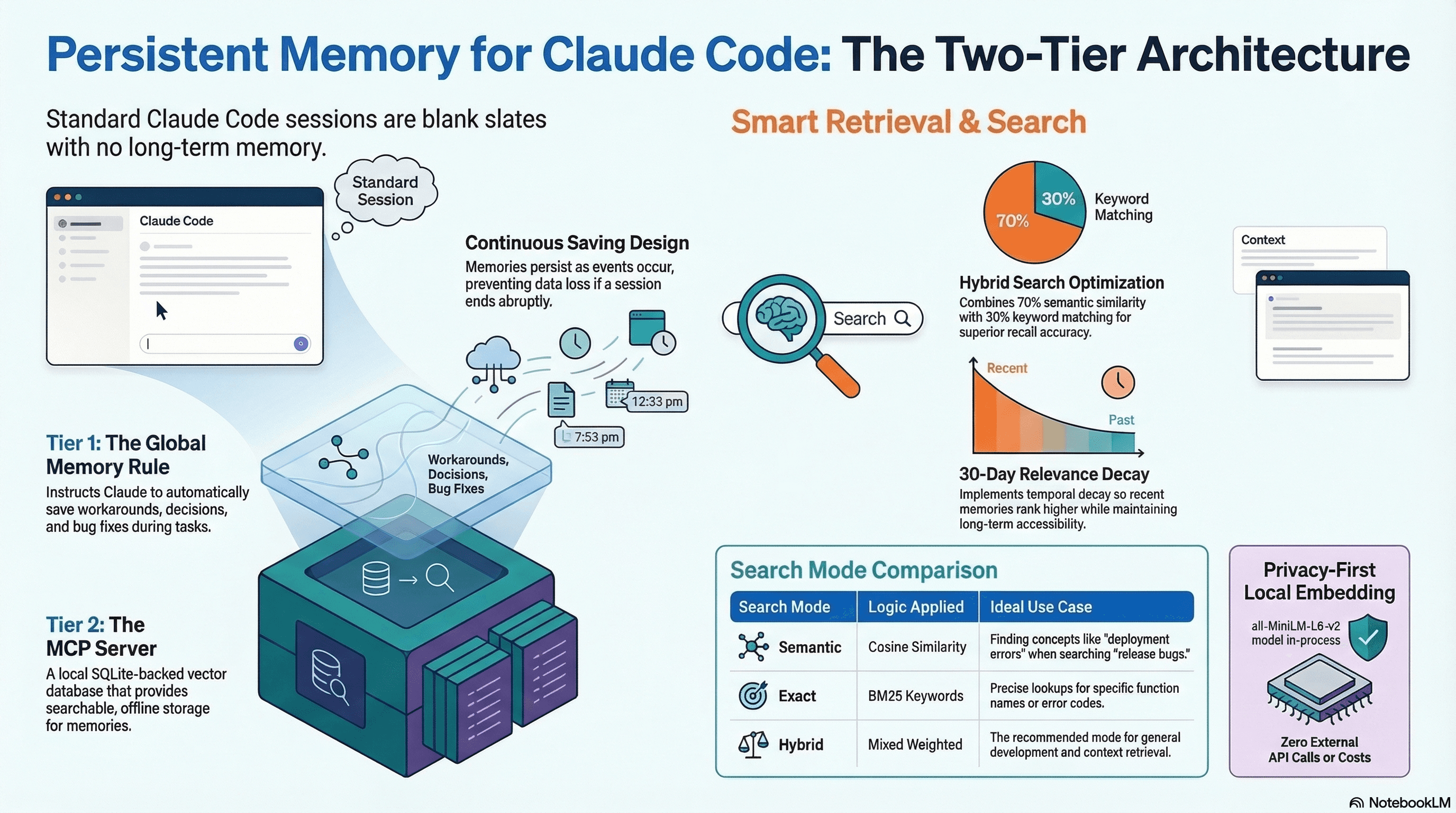
How to give Claude Code real persistent memory using a global rule file and a vector database MCP server, so context survives across sessions without any manual effort.