
Ledgerly
3 posts in this series
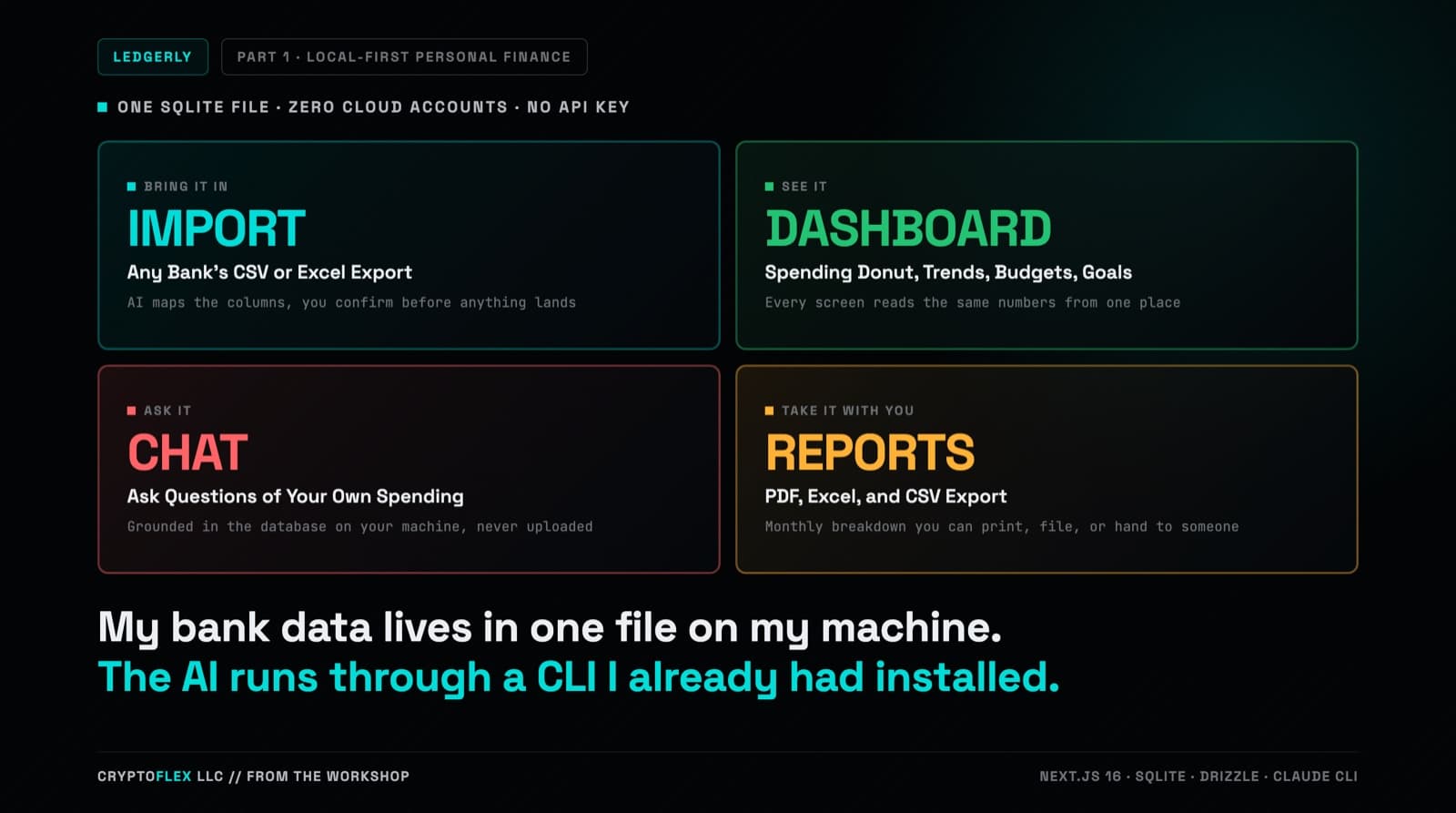
I wanted a personal finance app that molds to how I actually track money: any bank's CSV or Excel export, real categorization, budgets and goals, and an AI I can ask questions of my own spending. Ledgerly is what I built: local-first, one SQLite file on my machine, no cloud, and AI that runs through the Claude CLI I already have installed. This is part one of the series, covering the use case, the build, and two bugs a layman QA gate caught before I started running v1 against my real money.
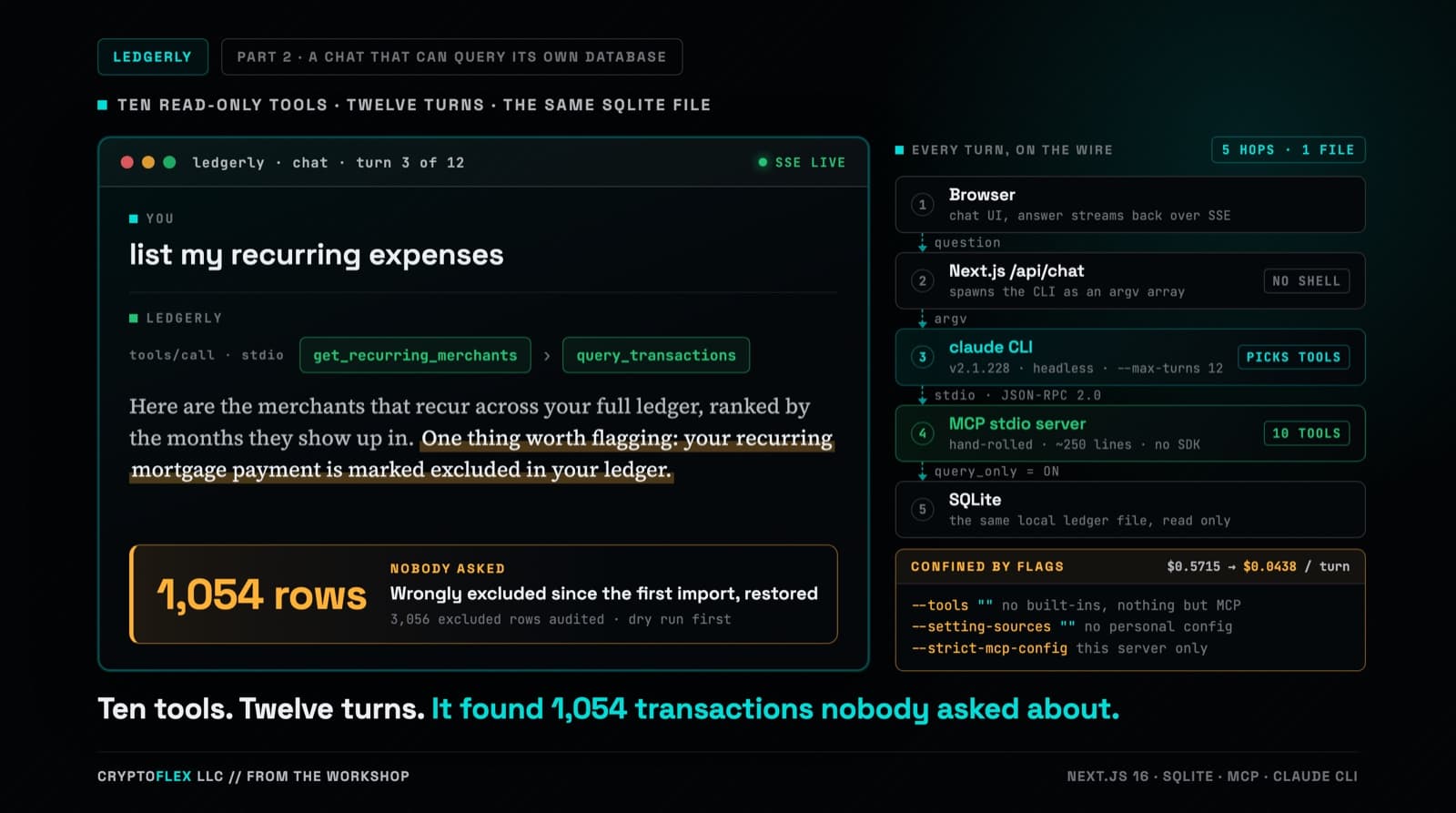
Part one's chat answered from two months of category totals stuffed into a single-turn prompt, and it could not run one query against the database sitting right there. Part two replaces that with a hand-rolled MCP server, ten read-only tools, and multi-turn tool calling confined by CLI flags a de-risking spike worked out against the real claude CLI. Three review passes ran before the commit, and one confirmed finding was a tool-name mismatch that every unit test passed and only a captured NDJSON fixture caught. The same work also turned up a data problem that had nothing to do with any of it: 1,054 real transactions wrongly marked excluded since the original import in part one.
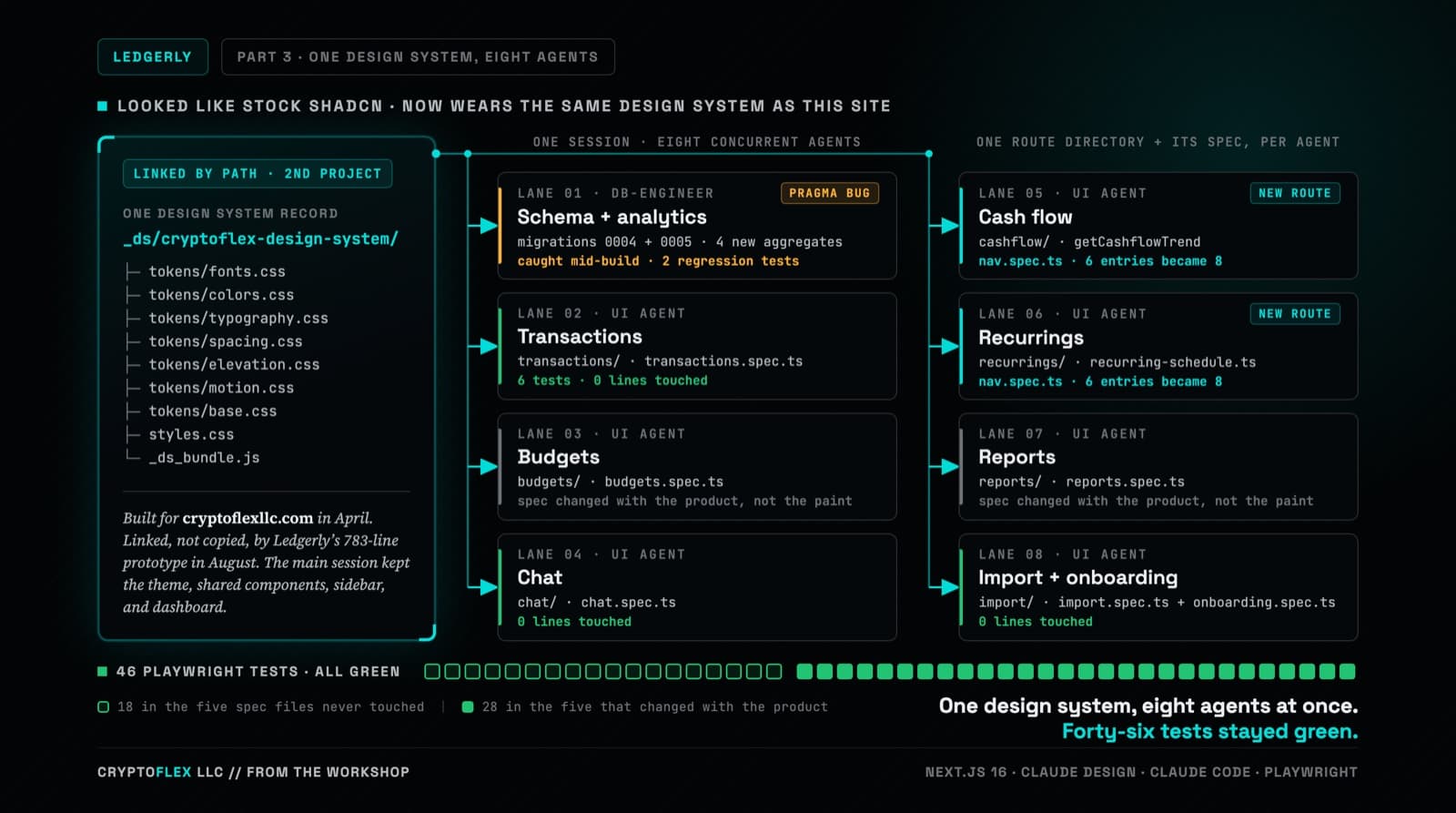
Ledgerly's UI still worked but looked like stock shadcn, so the whole thing went through Claude Design and came back wearing CryptoFlex's Cyber Editorial system, the same one from April's site rebuild. Eight parallel agents rebuilt every screen against real backend constraints while 46 Playwright tests stayed green, one of them written to prove a SQLite migration bug on purpose.